















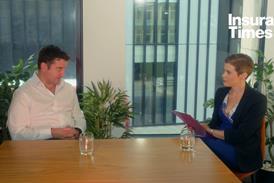

The broking trade body is keen to squash ‘ghost broking’ terminology as these criminals are ‘not brokers in any shape or form’, says head of technical services
Participants in Insurance Times’ Fraud Charter – a roundtable series held in association with law firm Carpenters Group – are seeking to stamp out ghost broking in UK general insurance (UKGI). The Fraud Charter Ghost Broker Focus content series will highlight how Fraud Charter attendees are working to identify, eliminate and prevent ghost broking from different market subsectors. Sharing this knowledge and best practice work is an important way for the industry to collaborate against insurance fraud.
Broking trade association Biba is adopting a multipronged approach to tackling ghost broking activity in UK general insurance (UKGI), endeavouring to support and educate broker members in terms of counter fraud measures, as well as raise awareness of ghost broker tactics with end consumers via its Find Insurance Service.
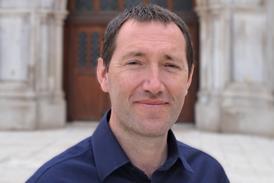
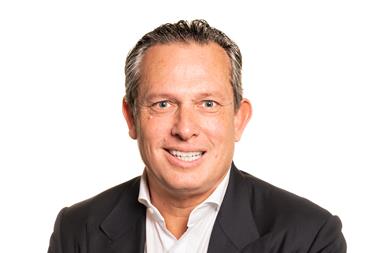
This feedback comes from Mike Hallam, head of technical services at Biba, who participates in Insurance Times’ quarterly Fraud Charter roundtable series, sponsored by law firm Carpenters Group.
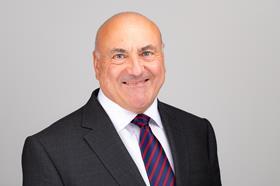
Hallam told Insurance Times that Biba “is keen to engage with stakeholders to reduce fraud at every level, which includes ghost broking” – although he takes umbrage with the now common terminology of ‘ghost broking’ because of the smear it potentially casts on legitimate broking professionals.
He said: “It is important to note that the term ‘ghost broking’ is not supported by either Biba or the government’s Insurance Fraud Charter. The [correct] terminology is ‘illegal insurance firms’ as they are criminals carrying out fraudulent activity and [are] therefore not brokers in any shape or form.”
The Insurance Fraud Charter Hallam referenced is a voluntary agreement between the UK government and the insurance sector, which was formed in October 2024. Biba is a signatory of this charter, which aims to support insurance firms to improve data sharing, identify and disrupt professional enables and better support insurance fraud victims.
Alongside supporting the government’s Insurance Fraud Charter and Insurance Times’ Fraud Charter, Biba additionally collaborates with not-for-profit organisation the Insurance Fraud Bureau (IFB) and the City of London Police’s Insurance Fraud Enforcement Department (Ifed), Hallam added.
“Ifed accepts crime referrals from insurers and intermediaries to continually build and develop intelligence. Where customers think they have been a victim of an illegal insurance fraud, they can also report their concerns to Report Fraud.”
Supporting broker members
Hallam explained that Biba utilises all communication channels at its disposal to flag ghost broking or illegal insurance firm activity with its membership, including webinars, online articles, conversations with trade press and content within its quarterly The Broker magazine.
He acknowledged, however, that larger Biba member brokers already “have sophisticated anti-fraud tools for fraud prevention, data cleansing and validation. This is designed to reduce insurer exposure to fraudulent or misrepresented risks across online and contact business centres”.
Hallam further noted that “fraud is often a topic of discussion at Biba committee [meetings] and advisory boards”.
He continued: “A consistent response is that, for example, a search on the likes of Instagram or TikTok for ‘car insurance’ or ‘cheap car insurance’ brings many profiles up of so-called insurance providers – but on further investigation, many are clearly illegal intermediaries. There are also lots of adverts on social media. Members do report these to the FCA to try and get them closed down.
“Insurance is legitimately sold by many channels, including via social media. It [is] wise to check approaches via social media, especially if the firm will only negotiate through [the] likes of WhatsApp, Instagram or messenger. Always look for evidence that they are a regulated insurance broker or company.”
Hallam additionally flagged that “Biba members also play a role in educating customers to potentially fraudulent intermediaries that provide quotes that are too good to be true and [that] may offer alternate payment methods, such as cash or even cryptocurrencies”.
Read: Briefing – Can the insurance sector take a leap of faith to deliver fraud strategy?
Read: Insurance fraud sector exemplifies the ‘good and bad uses of AI’
Explore more Fraud Charter related content here or discover more news here
He added: “Fraudulent sellers of insurance often user personal email addresses and mobile phone numbers as a method of contact, or advertise in pubs, cafes and newsagents.”
Double checking
Biba also has a duty of care around educating end consumers on insurance fraud tactics, Hallam confirmed, because of its Find Insurance Service directories, which cover lines of business such as cyber, flood, travel medical, motorbike and Armed Forces, for example.
The Find Insurance Service puts customers that cannot find suitable insurance cover for their specific need in touch with a relevant broker.
Hallam’s advice for insurance customers is to check that individuals or firms claiming to be legitimate insurance brokers are regulated by the FCA – this can be done via the regulator’s website. Consumers can also contact Biba to check if a broker is a member or reach out to the Financial Ombudsman Service (FOS) “if they feel they have been misled or unfairly treated by an authorised firm”.
He said: “It is important [that] if [a customer is] in any doubt about a company, before accepting any quotation, that time is taken to check their credentials or seek a quote from another company.
“A professional insurance broker will often state [its] authorisation and membership on [its] website. [It] will often operate only in usual or slightly extended business hours and have a [phone] number or website that [customers] can use to query [their] cover.
“As a rule of thumb, if something appears too good to be true, it may be that a mistake has been made or that the company is not [a] regulated broker.
“While a professional broker can find cover at very reasonable prices, [it] will not offer to manipulate [a] quote, for example, by offering to add non-existent drivers to a policy simply to reduce the premium.”

Since joining Insurance Times, Katie has successfully obtained a number of industry accolades. At trade body Biba's 2025 Journalist and Media Awards, for example, Katie was named the overall winner and received the Journalist of the Year trophy, alongside the Best Thought Leadership Award for her briefing article on reproductive health MGA Juniper and how insurance can be used to positively impact taboo subjects.View full Profile























No comments yet