
























Trade body has proposed changes to clause 17 of draft bill – not because it seeks ‘to lower the bar’ of the regulation, but because it is keen to see the legislation ‘work better’, explains chief executive
Politicians and peers should look to make “improvements” to the Financial Services and Markets Bill currently making its way through Parliament, particularly around the “metrics for accountability” impacting regulators and the need for a “ratcheting mechanism” to prevent complacency.

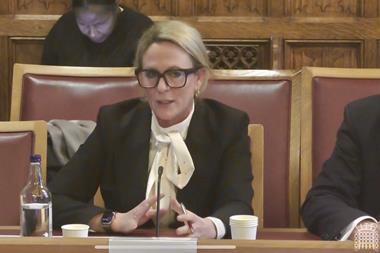
This is the view of Caroline Wagstaff, chief executive at the London Market Group (LMG) – an umbrella association that liaises with and supports the International Underwriting Association (IUA), Lloyd’s of London, the Lloyd’s Market Association (LMA) and the London and International Insurance Brokers’ Association (Liiba).
Speaking exclusively to Insurance Times, Wagstaff confirmed that the LMG had been “lobbying the House of Lords” for amendments to clause 17 of the Financial Services and Markets Bill ahead of the Parliamentary summer recess that started in July 2026. This break typically runs until September.
The Financial Services and Markets Bill, which had its first reading in the House of Lords in May 2026, was designed to modernise consumer protections and redress arrangements to reflect today’s markets, as well as consolidate current regulatory frameworks to enable stronger coordination, clearer responsibilities, reduced regulatory fragmentation and support innovation.
As part of these ambitions, the bill seeks to reform the Financial Ombudsman Service, for example, as well as cut elements of the Senior Managers and Certification Regime.
The bill has already undergone the first reading, second reading and committee stage, so when Parliament recommences in the autumn, the legislation will enter the report stage – this enables peers to propose and vote on amendments made to the bill in the committee stage.
Following the report stage is a third reading to finalise the bill before it gains Royal Assent.
One of the key amendments Wagstaff is lobbying for is a “ratcheting mechanism” that can be applied to regulators’ “metrics for accountability” – this should help to ensure constant improvements rather than letting regulators rest on their laurels.
She explained: “Currently, the regulators have key performance indicators (KPIs) on speed of approvals and so forth that are written into the legislation.
“The problem about that is [these KPIs are] carved in stone in perpetuity and so the Prudential Regulation Authority (PRA) will tell you very proudly that [it is] hitting 95% of [its] KPIs, [for example] – which to my mind is, well, maybe do it faster.
“What we’ve been asking for is what I call a ratcheting mechanism, so that those KPIs, when hit, will then get more ambitious and more granular.”
The LMG is further advocating that the “good stuff” on reporting within the bill should be extended.
Read: Soft market cycle driven ‘horrible’ hiring hiatus of young talent – Caroline Wagstaff
Explore more London market related content here, or discover more news here
Wagstaff noted, for example, that the original draft legislation required regulators to report on their secondary international competitiveness and growth objective for the next two years, however the LMG believes this reporting “should go on because it’s a really important thing for them to report on”.
The last amendment the LMG is raising is around “have regards”. These are statutory duties the FCA and PRA must adhere to that require them to ‘have regard’ of core regulatory principles such as proportionality, efficiency, the economic use of resources, sustainable growth and environmental obligations when undertaking their work.
Under the draft bill, there are proposals to “get rid of all the have regards”, Wagstaff said – however, the LMG thinks this is “very blunt” and that instead, the have regards should be “slimmed down” because they are still “really useful”.

She added: “We’re not asking to lower the bar – we’re just asking for it to work better.”
A regulatory ‘dial shift’
For Wagstaff, the recent bill builds on the Financial Services and Markets Act 2022, which she described as “a real game changer” and “the biggest dial shift in the last three years”.
This is because the act introduced “a secondary growth and competitiveness objective” for regulators that “really changed their behaviour”.
The act’s secondary objective requires UK financial regulators to help facilitate the international competitiveness of the UK economy and support its medium to long-term growth.
Wagstaff believes that this objective is the reason the PRA is currently consulting on a UK captives regime and why the FCA is exploring “the wholesale retail definition”.
She noted: “The captives example is absolutely live. The reason [the PRA is] thinking about this so hard is because [it knows that it has] to and [that] this could be a real growth driver. Here is a real way [the PRA] can take that objective and deliver through [its] behaviours better outcomes.
“The FCA, the same thing. [It is] looking at the wholesale retail definition to make our regulation easier.
“We have been really pleased with the relationship with the Treasury – [its] responsiveness to what the market needs, the fact [it has] identified wholesale insurance as one of [its] key industries.
“It’s been a real testament to the work that we’ve done, but lots of other people in the market [have done too] over the last five to six years in working with government and regulators.”

Since joining Insurance Times, Katie has successfully obtained a number of industry accolades. At trade body Biba's 2025 Journalist and Media Awards, for example, Katie was named the overall winner and received the Journalist of the Year trophy, alongside the Best Thought Leadership Award for her briefing article on reproductive health MGA Juniper and how insurance can be used to positively impact taboo subjects.View full Profile


























No comments yet