




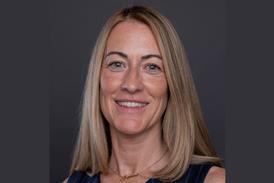
















Ki’s chief people officer Kelly Madeley believes the insurance industry needs to widen its talent pool, embrace different career paths and work collectively to show young people that insurance can be a career where they make a difference
Kelly Madeley did not take the traditional route into insurance – or even into HR.
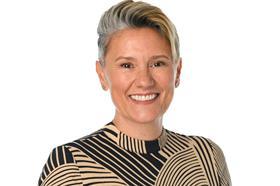
Trained as a dancer, Madeley was forced to reconsider her career after injuring her back. While working at Sainsbury’s, a conversation with an HR manager opened the door to a new path, with the retailer eventually funding her degree.
From there, Madeley built a career across HR and financial services, working at the Financial Services Authority, Bank of England, Chubb and Direct Line Group before joining broker Ki Insurance as chief people officer in January 2024.
That unconventional start has shaped her approach to talent.
“I’ve got a real passion for helping people to thrive and be their best,” she says.
“The things that I like to do from an HR perspective are helping people do the best work of their careers, really thrive and be really able to reach their potential.”
Her own experience has also fuelled a passion for social mobility and opening doors for people who may not have considered insurance.
She says: “Coming from quite a working class background, I always think about how we can open doors for people that perhaps don’t know a lot about insurance, HR or the wider skill sets that we particularly employ. That’s a real passion of mine.”
Widening the gate
For Madeley, the industry’s talent problem originates from a point long before a candidate applies for their first insurance job.
Read: CII awards chartered status to 195 insurance professionals in H1 2026
Read: Markel UK adopts ‘fluid’ approach to talent development to avoid ‘pigeonholing’ – Lee Mooney
Explore more talent-related content here, or discover more news stories here
She believes too little is being done to introduce the sector to young people at school-leaving age, with insurance often failing to make an impression on potential employees until they are already well into adulthood and need to buy a policy.
“Most kids don’t know about insurance until they need to get insurance,” she says.
The answer to this challenge, she argues, is not simply more traditional recruitment campaigns, but a fundamental rethink of how the industry presents itself.
“It’s a lack of knowledge around what [insurance] actually means,” Madeley says. “And then there’s the how do you make it more attractive for school leavers and graduates?”
But, more positiviely, she believes the breadth of careers available within insurance is one of the sector’s biggest untapped selling points.
Underwriting, technology, data, actuarial work, marketing and claims all require different skills, yet Madeley argues that the industry does not communicate that range effectively.
“It’s about the expansive amount of roles that are incorporated under an insurance umbrella that I’m not sure that we are promoting as well as we could,” she says
Ki is attempting to tackle that gap through its work with the Inspire Education Business Partnership, a charitable organisation that collaborates with businesses to provide career education, mentorship and skills development for young people.
The business has been bringing younger people into the business to meet employees across different roles and understand how they found their own way into insurance, with the programme designed to make the industry more relatable – and to demonstrate that there is no single route in.
Taking insurance to young people
Traditional careers fairs still have a role to play in attracting young talent to the sector, but Madeley believes the industry also needs to meet potential recruits where they are.
That means making better use of social media and other channels that young people already use.
She asks: “How do we go out to some of those school leavers? How do we use some of the channels and various things that are available to us to just do some education and do some interesting stuff that actually would entice people to go, ‘Oh, actually, I might look at that’.”
She also points to apprenticeships and graduate schemes as important ways of bringing people into the industry earlier.
Madeley’s experience at Direct Line and Chubb has shown her how the availability of entry-level opportunities has changed and, she believes, the industry needs to think carefully about how it develops junior talent rather than relying too heavily on experienced hires.
“I think we’re still sometimes more wedded to wanting [someone] very experienced, [someone who has] already done some of those things,” she says.
Instead, businesses should be asking how roles can be reshaped to attract people with potential and then develop them internally.
Where women fit
That philosophy around attracting young talent extends to Ki’s work to bring more women into technology and data roles.
Through its partnership with educational organisation Code First Girls, Ki provides opportunities for women who have reskilled into technology and data, with the aim of potentially creating full-time opportunities afterwards.
Code First Girls provides free coding education and employment opportunities to women and non-binary individuals to bridge the tech industry’s gender gap.
For Madeley, improving the gender balance in technology is partly about changing perceptions of what a career in tech looks like.
“Tech roles are far wider than just coding,” she says.
She also believes insurance needs to challenge the assumption that underwriting is inherently a male-oriented career.
“How do you think about non-traditional roles or traditional roles in a non-traditional way?” she asks.
“And how do you have more women doing roles that perhaps have always been seen as more male-oriented?”
Making those roles accessible also means considering what people need at different stages of their lives.
The skills of the future
As insurance becomes increasingly digital, Madeley does not believe technology will simply replace traditional insurance skills.
Instead, the future workforce will need to combine both.
She describes the ideal young professional as effectively “bilingual” – technologically fluent while also possessing commercial awareness, judgement and relationship skills.
As the risks facing businesses become more complex, she argues that skills such as judgement, decision-making and dealing with ambiguity will become increasingly valuable.
“Those ‘soft’ skills – they’re not soft at all,” she says.
AI may remove some of the more repetitive administrative work, but Madeley believes that will make human judgement even more important.
As Ki itself expands, this approach to hiring has become even more essential to clarify.
Madeley says the business has grown from around 80 employees to 380 in roughly two and a half years, creating a new challenge for its people function around how to scale without losing the culture that made the business attractive in the first place.
She says: “How do you keep some of what’s really the real essence of Ki, which is that entrepreneurial, fast-paced ability to really make a difference when you scale from like 80 people to 380?”
The answer is not to preserve culture as it currently exists, she says, but to build the structures needed to support growth while retaining its core characteristics.
Ultimately though, Madeley believes the industry’s talent challenge cannot be solved by individual businesses working alone.
The London market needs to work together to demonstrate what insurance can offer – particularly to the next generation.
“That’s where we’re going to have the biggest impact,” she concludes.
“I’d like to see an industry that’s full of more young professionals because it’s an interesting place to be where they can make a difference.”
That, she argues, is the message insurance needs to get better at telling.

With a background in local journalism, she has previously worked as a freelance reporter covering community stories and gaining valuable on the ground experience.View full Profile


























No comments yet