






















International head of distribution says specialty insurer is planning to “strike that gold” with tiered broker distribution strategy, aiming to mirror UK plan implementation in the US and Europe
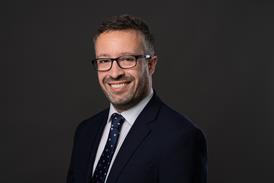
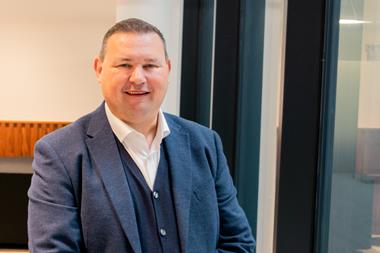
Stuart Heath, head of distribution for global specialty insurer Tokio Marine HCC’s (TMHCC) international business, part of Japan-based Tokio Marine Group, is laser focused on forging what he feels is a “differentiator” and “fresh idea” in general insurance – a global distribution strategy concentrated on being the lead insurer on certain broker facilities.
Admittedly, TMHCC may have arrived late to the party in terms of setting up a distribution function to collaborate with the market’s brokers on facilities and panels.

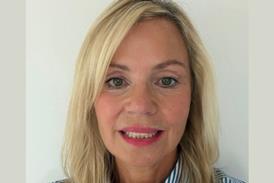
Heath, who has been the insurer’s head of delegated property since 2019, took on an additional, newly created role in February 2025 to become TMHCC’s international head of distribution – the first the business has employed.
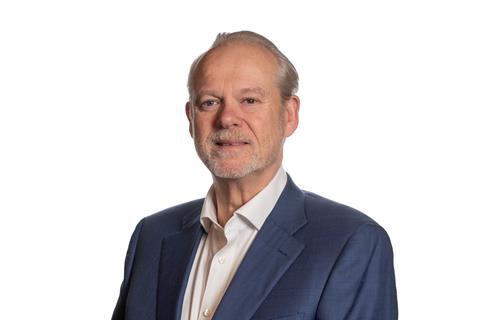
The primary driver behind this new aspect to Heath’s job was the insurer’s desire to establish a distribution strategy – one that would be carefully crafted by Heath and then supported by his counterpart across the pond, Brendan Gaine, head of North American distribution, who was also appointed in February 2025.
Heath finalised his strategy in alignment with Gaine in July 2025.
This consists of targeting three international “tier one” brokers to work with as the lead insurer on a single class facility, covering lines such as marine, property and casualty.
Although Heath tells Insurance Times that multiclass facilities are not on TMHCC’s agenda at all, in alignment with existing underwriter expertise within the business, he notes that the renewables and energy transition market is a growing sweet spot for the insurer’s facility appetite, as is European property and UK casualty.
These latter two lines are ones TMHCC is currently “very light in”, so Heath is keen to build out these portfolios via chosen tier one broker facilities and panels.
He explains: “We’re unlikely to write multiline classes and that’s still going to be the case – primarily because in every single line, we have really strong underwriters that are leaders in every class. So, it’s trying to find ways [of] getting more lead business through the existing facilities that these tier one brokers have got.”
When TMHCC’s distribution strategy launched last summer, Heath was aiming to pin down three tier one broker relationships. Speaking exclusively to Insurance Times nearly a year later, Heath confirms that the insurer has secured two tier one broker arrangements – signed off in December 2025 and April 2026 respectively. The third tier one broker deal is due to be finalised this summer.
Also in 2026, TMHCC has succeeded in landing two exclusive panel placements – one focused on construction and the other on financial lines. Heath describes these arrangements as “a definite win” for the insurer – especially as a key focal point for 2026’s second half is “being aware of other new panels that are being tendered” and seeing which ones TMHCC can win.
Underneath this top rung of tier one broker partners, Heath adds that TMHCC – which writes around $2.9bn (£2.2bn) in gross written premium (GWP) across the international business – is also striving to secure three “tier two” broker relationships.
For him, TMHCC’s tier one brokers “have got a wide spread of business in all of our lines where we lead”, while its three tier two brokers are only tapping in to “two or three lines where we’re strong”.
Read: Tokio Marine Kiln launches updated cyber risk management offering
Read: Tokio Marine International appoints new chief claims officer in latest leadership change
Explore more insurer related content here, or discover more news here
Heath continues: “It makes sense that we use [our] capability to expand in other lines from those brokers where there’s already a relationship in place.
“So, with those tier two [brokers], the plan would be as we grow those [relationships across more lines of business], if we can see that they have got the business volumes to get into a tier one status and we can genuinely support them with our time, then that will be a natural progression. And then we’ll get a broker that’s not in any of the tiers yet to replace a tier two and we see that promotional effect.”
Heath expects to see movement between the broker tiers by the end of 2026 – although he is keen to emphasise that this approach to distribution is not a pure volume play.
He says: “There’s no point having too many [facilities] because it doesn’t become exclusive. If it doesn’t become exclusive, then you might as well trade with everyone. The important thing for us is that we must trade with a broker that has got the same culture. That’s a really critical part of what we do.
“The second thing will be that they’ve got sufficient volume in the insurance classes that we write that we can be relevant with them. We have to be relevant.”
Supporting staff
Success of this distribution strategy is tied to underwriting profit rather than topline financial results, Heath adds – although more enquiries and business written will ultimately lead to improved GWP. Ideally, however, Heath would like to see a 15% to 20% improvement in tier one broker new business over the next three years.
This kind of growth trajectory would support Heath’s ambitions to build his team. He confesses that he has been unable to dedicate as much time as he would like to the tier two broker relationships because he is currently operating solo, in many respects. This is another reason why the number of tier one and tier two brokers is currently capped at three per tier.
“Phase two of the role will probably be to start getting support,” Heath says.
“It sounds odd because you can see in other insurers, they have a fully-fledged distribution team. Those insurers, though, tend to focus a lot on follow market facilities, so they almost have a portfolio solutions team [rather than a distribution team].
“We’re not having that. We are taking a slightly different strategic approach.
“We’re not reinventing a wheel. It’s more about if you’ve got good relationships, predominantly with tier one brokers, are we getting enough opportunity for all our lines of business? It may be that we’re strong in one or two lines and we’re not leveraging that relationship sufficiently to get more business from the other lines where we’ve also got lead qualities.
“It’s making sure that we spread ourselves really strongly across all the lines that we write. That’s what we should be leveraging first and foremost.”
Heath is happy to start recruitment at one additional person, once his distribution model starts bearing fruit, with this individual being “more of a tech driven person, probably with some ability to do some follow up relationship roles”.
He is also keen to tap into TMHCC’s investment into artificial intelligence (AI) and associated data scientists within the business “so that we can start getting all of our data under a huge warehouse that can enable us to use data scientists to try and improve our process map, which then gives us a faster speed of response to brokers on underwriting risks”.
Going global
Heath has spent the last year implementing his distribution strategy in the UK – however, he is keen to see it properly take flight in TMHCC’s North American business under Gaines, as well as in Europe, with the insurer soon to appoint a head of distribution for this jurisdiction too, Heath confirms.
He is adamant that a “global approach” is the “next step” TMHCC should be taking.
He explains: “There’s very few brokers that do global arrangements. We need to see if we can break that mould and have a global arrangement. We’re a top six insurer in the world, we must be able to strike that gold.”
Heath feels that many insurers are “very focused on their own geographical targets”, with “established distribution teams in place”. The fact then that TMHCC is still “very fresh” – only having set up its international distribution function around 15 or so months ago – “means that you’ve got fresh ideas”.
For him, this “connectivity” worldwide in terms of distribution approach is vital to combating soft market conditions and aligning with global broking businesses.
He continues: “Maybe that’s a bit of a differentiator. I don’t know why others haven’t done it.
“We just need to whisper a bit louder and we’re doing that now with two of those [tier one] brokers. We are a loud voice in their businesses and getting to meet all of their heads of lines, so that we can start explaining where our strengths are [and] they can start selecting the risks they know we can write well and start placing it with us and give us bigger shares.”

Since joining Insurance Times, Katie has successfully obtained a number of industry accolades. At trade body Biba's 2025 Journalist and Media Awards, for example, Katie was named the overall winner and received the Journalist of the Year trophy, alongside the Best Thought Leadership Award for her briefing article on reproductive health MGA Juniper and how insurance can be used to positively impact taboo subjects.View full Profile






























No comments yet