








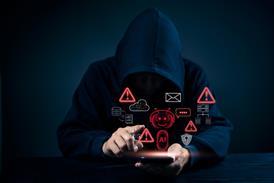
















Conflicts involving Russia, Ukraine, Iran and broader geopolitical tensions have ‘increased the likelihood that major events will be used as platforms for cyber-enabled messaging and symbolic attacks’, says director of threat intelligence services
The Fifa World Cup starts on 11 June and runs until 19 July 2026, a quadrennial sporting spectacle that will keep football fans across the globe glued to their screens as 48 teams compete to bring home the glory.

But, as the tournament enters the world stage once again – broadcast from the US, Canada and Mexico – it also presents a lucrative target for cyber attacks across its vast network of interconnected supply chains.
The month-long global operation relies on a complex digital ecosystem, including broadcasting infrastructure, ticketing platforms, security systems, concession sales, health and safety technology and fan engagement applications.
And for Matt Foster, head of London market at Coalition UK, this highly interconnected system creates a potential “single point of failure” in which a successful attack against one critical provider could have “cascading impacts across multiple aspects of the tournament”.
Speaking to Insurance Times, Foster said that the global attention, economic activity and critical digital infrastructure concentrated in an event of this scale presents cyber criminals the opportunity to cause “widespread disruption, extort victims or simply generate publicity”.
This disruptive cyber activity been seen in previous major tournaments. For example, the opening ceremony of the 2018 Winter Olympics in Pyeongchang, South Korea was hit by a malware attack – the infamous ‘Olympic Destroyer’ – which disrupted ticketing systems, wifi networks and other event infrastructure.
Foster explained that the incident demonstrated “how attackers may target the wider ecosystem surrounding a tournament, including third-party providers and operational technology, rather than the event organisers themselves”.
He continued: “Given the vast distances between the 2026 host cities across the United States, Canada and Mexico, a cyber incident affecting a regional airline, transport hub or critical logistics provider could have real-world consequences, potentially preventing teams, officials or fans from reaching matches on time.
“The same principle applies to the tournament’s digital infrastructure. More than 100 national broadcasters will rely on shared technology providers and digital supply chains to deliver matches to audiences around the world. A successful attack on a critical supplier could have cascading impacts far beyond a single organisation, disrupting broadcasts across multiple markets simultaneously.
“Ticketing platforms present another key dependency. Modern major sporting events rely heavily on app-based ticketing systems, identity verification tools and digital access controls. Any disruption affecting these systems at a critical moment could create significant operational challenges for organisers and spectators alike.”
More opportunity
These vulnerabilities across the supply chain are also likely to lead to an increase in cyber insurance claims.
Read: World Cup windfall or claims headache? Hospitality’s summer surge puts insurers on alert
Read: Cyber insurers warn AI is accelerating phishing and business email compromise attacks
Explore more cyber-related content here, or discover more news analysis here
This was according to Matt Hull, vice president head of cyber intelligence and response at global cyber security firm NCC Group, who told Insurance Times that the “opportunity” the international event presents for cyber criminals will place greater “demand on insurance”.
But, as well as financially motivated attacks, Hull explained that there is a risk that “hacktivist groups [will want] to cause disruption on a big world stage and that disruption will eventually lead to potential claims”.
This is particularly the case, Foster added, as the “geopolitical dimension of cyber risk has become increasingly relevant for major sporting events”.
While it is difficult to predict specific targets, he said that major global events can present attractive opportunities for threat actors “seeking visibility, disruption or political messaging”.
He continued that this activity has the potential to “manifest through [distributed denial of service] (DDosS) attacks”, when attackers flood a website or online service with traffic to overwhelm it and force it offline, as well as website defacements, influence operations, attacks on third-party suppliers or attempts to disrupt critical digital services relied upon by organisers and fans.
This was the case during Euro 2024, when DDoS attacks successfully disrupted online broadcasts of Poland’s matches.
He explained that this instance highlighted how attackers can “weaponise live event windows where even short periods of downtime can have a significant impact on viewers, broadcasters and sponsors”.
William Altman, director of threat intelligence services at CyberCube, said that this presents an evolution of the threat from opportunistic attacks into “coordinated campaigns involving state-linked actors, disinformation networks and cybercriminals”.
He continued that conflicts involving Russia, Ukraine and Iran, as well as broader geopolitical tensions have “increased the likelihood that major events will be used as platforms for cyber-enabled messaging and symbolic attacks”.
According to security researchers Armis’ 2026 Cyberwarfare Report, published in March, 54% of UK companies reported suffering an act of cyber warfare, state-linked cyber attack, last year – up from 47% in 2024.
And, Altman stressed that hacktivist groups – which use cyber attacks to advance political, ideological or social causes – are “highly likely to target World Cup-related organisations because the event offers unparalleled global visibility”.
Sharing this view, Hull explained that the tension between Iran and the US has the potential to lead to pro-Iranian activist groups to see this “as a stage to spread their messaging”.
He said that there also needs to be awareness of the “elevated threat” that hacktivists may use the World Cup as a mechanism to spread misinformation using deep fakes and AI-generated content.
Altman added: “State-linked actors pose a lower-frequency, but potentially higher-impact threat.
“Their objectives may include intelligence collection, political signalling, influence operations or disruption of critical infrastructure supporting the event. While a major cyber-physical disruption remains unlikely, even limited attacks can generate disproportionate media coverage and undermine public confidence. In many cases, the reputational and psychological effects of an attack may exceed the direct operational impact.”
Managing exposure
With insurance exposure heightened from the tumultuous geopolitical climate and advancements in AI, prevention is becoming an increasingly important focus for insurers.
Altman said that “the key challenge is not protecting a single organisation, but securing an interconnected ecosystem”.
For insurers, he explained that better security outcomes can be driven through “underwriting requirements focused on vendor management, multi-factor authentication, backup resilience and business continuity planning”.
He added that corporate risk managers also have a part to play in prioritising “supplier mapping, contractual security requirements, tabletop exercises and contingency planning for critical service providers”.
Foster added that these incidents reveal “the growing importance of prevention and preparedness”.
While insurance plays a critical role in helping recovery, he explained that the industry is increasingly focused on helping policyholders reduce the likelihood of attacks occurring in the first place.
Via an approach that Foster branded ”active insurance”, he said that the broker uses continuous monitoring to “identify potential vulnerabilities and alert organisations to emerging threats before an incident occurs”.
This approach, he explained, helps organisations strengthen their resilience against phishing, social engineering and other common attack methods that often increase around major global events.
He concluded: “Ultimately, the most effective defence combines strong employee awareness, robust authentication controls, threat monitoring and cyber insurance as part of a broader risk management strategy.
“As attackers become more sophisticated, organisations need to focus not just on recovery, but on reducing risk before an incident takes place.”

She joined the title after completing a Master's degree in Journalism in 2025, having previously graduated with a degree in English Literature.View full Profile


























No comments yet