










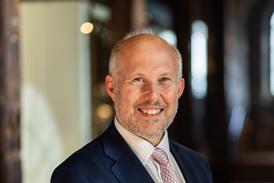


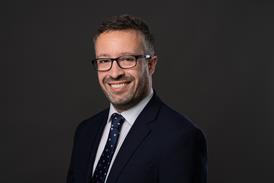











’In the end, we see so many examples in the industry where [the smaller firm] turns into an extended workbench internally,’ says chief executive
Traditional insurers are still struggling to effectively acquire and integrate startups.

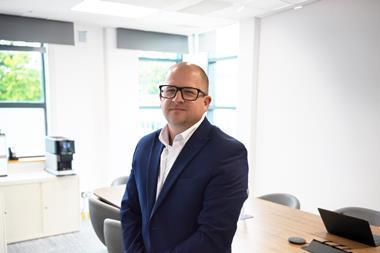
That is according to Stephan Tan, chief executive of Europe, the Middle East and Africa (EMEA) at international insurtech Bolttech, who said that he is often “sceptical” that such deals deliver real transformation.
Tan spoke during a panel discussion entitled ‘Yesterdays Promises vs. Today’s reality: Navigating M&A Strategies’ at Insurtech Insights Europe 2026 on 19 March 2026.
The panel session aimed to explore the current trends and drivers for M&A between insurtechs and firms, alongside the persistent challenges to integration that accompanies these acquisitions.
Tan questioned whether firms have truly learned that they can transform through a single acquisition, which led to his scepticism around the value of acquiring and integrating startups.
He explained that the issue lies in firms identifying organisation-wide problems and then trying to solve them by buying a company upon the assumption that the acquisition alone will fix the issue.
He continued: “In the end, we see so many examples in the industry where [the smaller firm] turns into an extended workbench internally, [which has] killed the entire entrepreneurial spirit.
“That is the unfortunate thing that I think is still true.”
‘Mismatch’
Meanwhile, Rob Moffat, partner at Balderton Capital, felt that there was a “mismatch” between insurtechs looking to “transform” large firms and them not being ready to fund it.
Read: New MGAs should choose between distribution advantage and underwriting insight
Read: ‘Rest of the world’ should adopt insurance’s risk modelling approach – Rowan Douglas
Explore more insurtech-related stories here, or discover more news here
Noting that there is a move from traditional insurers to integrate gen artificial intelligence (AI) in-house, Moffat believes that this can only end in “disaster”.
He explained that this will eventually signal a shift towards acquiring insurtechs to change the culture of the firms.
In the short-term, however, fellow panellist Tara Reeves, managing director at Eurazeo Ventures, expected that companies will increasingly lean towards “under-the-hood consolidation”.
Firms will gain scale by buying books of business, she explained, as operational leverage becomes “increasingly more expensive” and companies seek alternative ways to consolidate.

She joined the title after completing a Master's degree in Journalism in 2025, having previously graduated with a degree in English Literature.View full Profile




























No comments yet