















’We are the only industry that properly takes blood pressure, not just has a nice chat with the doctor,’ says senior advisor
Insurance’s advanced risk modelling techniques should not be constrained within the industry, but should be adopted by “the rest of the world” to build resilience and improve societal outcomes across every sector.
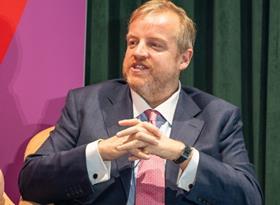
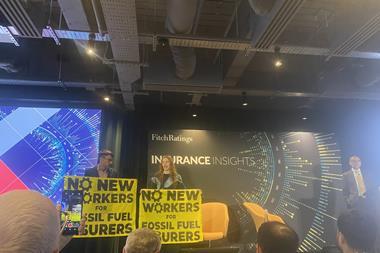
This is according to Rowan Douglas, senior advisor at Howden, speaking on a panel entitled Beyond Climate – Innovating for Societal Resilience at the Insurtech Insights conference, held on 18 and 19 March 2026 in London.
During the panel discussion, participants highlighted how the nature of climate risk has moved beyond purely being an environmental issue and into the realm of a societal issue, with factors such as public health and wider economic resilience now a concern for insurers providing climate-related protection.
Douglas explained: “Insurance is a force for good, as well as a force for growth. Insurance is a remarkable thing – it’s the essence of a civilised society. We decide collectively, locally and globally what it is we value and we manage that risk.
“Critically, we all contribute to a pot – whether it’s through insurance premiums or taxation – to have an entitlement when certain things go wrong, but we’ve no guarantee we might get money back ourselves.
“In some ways its become the forgotten third leg of finance, but now, ironically as people worry about access to insurance, that third leg of finance is getting reattached to the stool and it’s very exciting.”
Technological advantage
The benefits of this social and financial resilience, however, can only be fully unlocked with careful and accurate application of risk capital.
Read: Westfield Specialty modernises underwriting with insurtech
Read: OpenAI approves insurance quotes within ChatGPT
Explore more risk management related content here, or other news stories here
In Douglas’ opinion, the sector positioned itself not just as the provider of such capital, but as the best and safest arbiter of such application following “major natural catastrophe events in the 1990s” that “left the industry in ruins”.
He said: “It has gone from relative ruin to relative resilience in just a couple of decades through technology. We began to understand risk rigorously through catastrophe risk modelling and other actuarial techniques.
“We are the only industry that properly takes blood pressure, not just has a nice chat with the doctor. We take our blood pressure and we disclose that and we manage that risk. The rest of the world needs to begin to adopt those same techniques.”
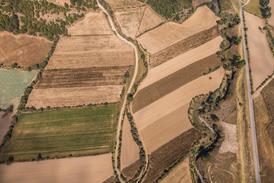
To illustrate a modern application of the insurance market’s technological advantage, Douglas highlighted the work that Howden has recently done with the European Commission to assess the climate risk to current and future yields of European crops.
According to him, the metrics and methodologies of the insurance sector – in essence catastrophe risk modelling – provided warnings about potential crop losses that shocked the commission.
It also highlighted to the commission the lack of effective risk sharing between “consumers of food, the people who have to produce it and everyone in between”.
“Risk modelling is the key to adaptation resilience. Because it actually tells you if you build that reservoir, or change that behaviour on a farm, and you rerun the simulations, how much risk is reduced,” he concluded.
“It gives a finance minister, as much as an agricultural minister, as much as a farmer, the knowledge of where to spend their precious dollars on resilience.”

He graduated in 2017 from the University of Manchester with a degree in Geology. He spent the first part of his career working in consulting and tech, spending time at Citibank as a data analyst, before working as an analytics engineer with clients in the retail, technology, manufacturing and financial services sectors.View full Profile


















No comments yet