























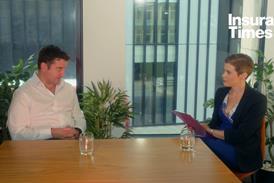

’There are different performances within different insurers, so some of the smaller ones may have to exit,’ says director
Smaller insurers may exit the motor sector if predictions that the market will fall into the red this year come true, Stephen Kennedy, director of insurance pricing at Pearson Ham, told Insurance Times.

According to figures published by Ernst and Young (EY) in December 2025, the sector is expected to only break even in 2025 and be loss-making in 2026, with net combined ratios (NCRs) of 101% and 111% respectively forecast for the next two years.
Kennedy felt the larger players carrying out M&A will be in a better position to take advantage of a tough motor market in 2026, given they can “benefit from the efficiencies of that consolidation”.
Examples of this include Aviva completing its £3.7bn acquisition of Direct Line Group (DLG) and Ageas reaching an agreement to acquire motor and home insurance provider Esure for £1.3bn in 2025.
However, Kennedy felt smaller firms may struggle with cost savings and might not be able to compete with such players.
He explained: “There are different performances within different insurers, so some of the smaller ones may have to exit.
“We’ve got quite a bit of market consolidation going on at the moment, with deals like Aviva and DLG, Ageas with Saga and Esure, we’ve got Markerstudy and all of the other brands that it picked up.
“They should be able to benefit from the efficiencies of that consolidation, so in terms of keeping the expenses down [and] cost of claims.
“They should have a benefit in terms of their profitability just through scale, which the smaller insurers may not have.
“There is a potential that smaller insurers may not be able to compete within that market, with the benefits of the cost savings that some of those larger ones have.”
Repetitive cycle
EY’s prediction came following the onset of challenging soft market conditions in 2025, which saw claims costs increase as premiums dropped.
Read: Does telematics remain untapped, or is the tech overhyped?
Read: Aviva’s Jason Storah – ‘Personal lines market needs a bit of rope’
Explore more motor related content here, or discover other news stories here
EY said that high repair costs, more expensive car technology and inflation were all driving up claims costs and squeezing insurers’ margins.
Jason Storah, general insurance chief executive for UK and Ireland at insurer Aviva, told Insurance Times that EY’s data showed a “not healthy motor market” and that following personal lines rates dropping by “about 11%” over the past 12 to 18 months, this marketplace “needs a bit of rope” – otherwise “the industry just can’t last too long”.
However, despite the outlook, Kennedy noted that “it’s one of those cycles that has been going on for years and years”.
He said: “If you look at EY’s predicted COR, once it gets to a level which is above say 107%, that is when we generally see prices coming up in the market.
“It comes to a point where insurers are a bit more comfortable in terms of profitability – and then they want to be competitive, they want to drive new business and prices start to come down.
“Because it is such an ultra competitive environment, with so much business going through the comparison sites, it’s clear when your competitors make a price move and others can then react to it – and then we see prices coming down.
“It’s something which we’ve seen before and it is an ongoing cycle.”

His career began in 2019, when he joined a local north London newspaper after graduating from the University of Sheffield with a first-class honours degree in journalism.
He took up the position of deputy news editor at Insurance Times in March 2023, before being promoted to his current role in May 2024.View full Profile



























No comments yet