























’Everybody is in the mood to start increasing prices,’ says director
The UK insurance motor market is set for a difficult 2026, with Ernst and Young (EY) forecasting that losses are expected this year.
According to figures published by the professional service firm in December 2025, the sector is expected to only break even in 2025 and be loss-making in 2026, with net combined ratios (NCRs) of 101% and 111% respectively forecast for the next two years.
This means that for every £1 earned in consumer premiums in 2025, the motor market was estimated to have paid out £1.01 in claims and expenses – with this number rising to £1.11 for 2026.
This compares to 97p in 2024, the first time the motor insurance sector achieved underwriting profitability since 2021.
EY’s number crunching followed the onset of challenging soft market conditions in 2025, which also saw claims costs increase.
EY said that high repair costs, more expensive car technology and inflation were all driving up claims costs and squeezing insurers’ margins.
Tim Baxter, business development and relationship director at MGA Prestige Underwriting, said: “The elevated position and continued focus on claims inflation really is a big part of that market NCR projection.
“We expect to see the cost of materials, labour, the supply chain and credit hire facilities all impact the [motor market’s] position going into 2026.”
Gary Humphreys, group chief underwriting officer at Markerstudy, added: “The market saw increasing frequency of third party damage claims in 2025, which along with continuing economic pressures on claims inflation trends and the uncertainty with the war in the Middle East, means combined operating ratios (CORs) could be headed towards market losses.
“These factors alongside an excess of capacity and reduced price comparison website (PCW) traffic are suppressing rates at a time when the market needs stability and less reliance on prior year releases.”
Price reductions
Humphreys also said that the “UK motor market experienced substantial rate reductions that carried into 2026”.
Read: UK car insurance quotes available on ChatGPT as MoneySuperMarket launches new app
Read: Motor insurers paid out £11.9bn in 2025
Explore more motor-related content here, or discover other news analysis stories here
And EY noted that its deteriorating market outlook was driven primarily by continued inflation, combined with falling premiums over the course of the year.
It added that after a period of stability in 2024, many motor insurers lowered rates to keep up with competition.
Indeed, according to the latest edition of the Confused.com and WTW Car Insurance Price Index, released on 7 January 2026, the cost of motor insurance had fallen by 13% in the previous 12 months.
This means drivers are now paying an average of £111 less for their cover each year.
Stephen Kennedy, director at Pearson Ham, felt that following a few years of disruption in the market, prices were becoming a bit more “normalised”.
He said: “We’ve had quite an extended period of price reductions. So, we did see premium inflation in 2022 and 2023, but since then things have been coming down.
“The claims costs and the inflation in claims have been sustained. There has been a rebalancing and we are probably in a place where prices are a bit more normalised.”
However, he noted that following reductions, it may now be time for insurers to “start to try and get back to a profitable position” amid rising claims.
EY predicted that while premiums are expected to fall 10% in 2025, they should tick back up to 3% in 2026.
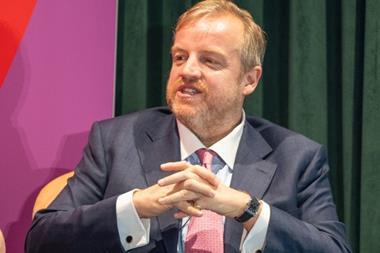
Kennedy felt that “everybody is in the mood to start increasing prices”, adding: “Everybody that I have talked to for a while now has said ‘prices need to come up, we’re feeling a bit uncomfortable with where the pricing levels are’.
“EY are predicting [a] 111% NCR in 2026, so people are a bit concerned about that and they have their own internal claims analysis and are getting a bit worried.”
Baxter echoed this, adding that “we do expect to see some rate strengthening for the rest of the year”.
Surviving the market
Despite anticipated premium rate rises over 2026, EY believes escalating claims costs will continue to outpace the level of these price increases, hence the outlook that motor insurers will fall deeper into the red this year.
So, how can motor insurers continue to stay competitive in the market without going into the red in 2026?
Andrew Brown-Allan, chief growth officer at telematics provider IMS, said: “The best way to write a profitable book of motor business is not to write about risk in the first place.
“The ability to employ more intelligence pre-quote, more screening pre-quote and making sure you are only writing risk that will be profitable to you – that’s the holy grail.
“Investing really heavily in risk selection and then being quite aggressive on risk management and cancellation – that’s how you insulate yourself against being unprofitable and having a net bad underwriting result.
“There’s lots of factors that can insulate you against some of these difficult market conditions. And it will be the [firms] that think more laterally about how to solve the problem that will prevail and come through this with a better set of results and ultimately be more resilient to these market forces.”
Humphreys added: “There are signs that insurers are winning by being more focused on footprint expansions and targeted rating action that align to segments where there is more perceived margin. New brands continue to appear on PCWs, enabling insurers to protect existing portfolios while driving growth in different target markets.
“Tiered product propositions and technology driven, data led models are creating changing dynamics, while opportunities to tackle more non-standard risks within pricing models is allowing insurers to grow outside of their core markets.”

His career began in 2019, when he joined a local north London newspaper after graduating from the University of Sheffield with a first-class honours degree in journalism.
He took up the position of deputy news editor at Insurance Times in March 2023, before being promoted to his current role in May 2024.View full Profile































No comments yet