











Alongside tailored risk transfer, captive creation is booming in preparation for the next hard insurance market cycle, says insurer’s global and specialty director
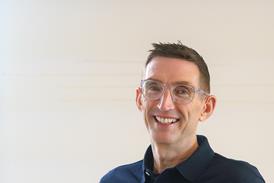
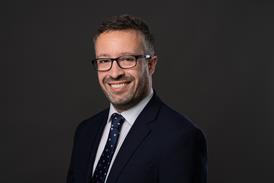
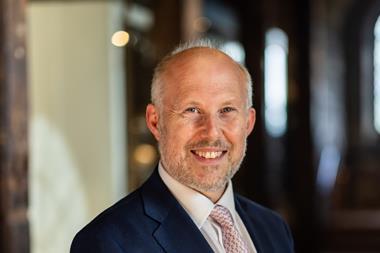
Airmic 2026: The “importance of having dovetail policy wording” to address potential protection gaps caused by today’s “increasingly fragmented” yet “more interconnected” risk environment is front of mind for both risk professionals and their risk transfer partners, according to Luke Baker, director in insurer Allianz Commercial’s UK global and specialty team.
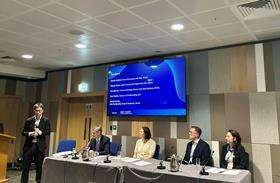
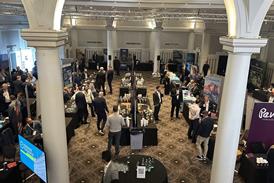
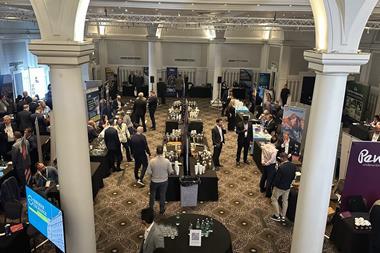
Speaking exclusively to Insurance Times during the three-day Airmic Conference in Birmingham last week (15 to 17 June 2026), Baker emphasised that his “clients are very much interested in understanding how our policies and products overlap and [making] sure that their exposures don’t fall between gaps that exist [within] traditional monoline structures” as “how different factors interplay give a risk profile which is more interconnected and overlapping than it has been historically”.
Baker outlined an extensive example of how interconnected risks are having a broad scope when it comes to triggering insurance policies and affecting coverage.
He said: “It’s an interplay between cyber exposures and supply chain disruptions, together with geopolitical violence, terrorism type losses. So, if you imagine the scenarios that exist within the Middle East now, we have the marine exposures – first party exposures [for] vessels and cargo within the Strait of Hormuz – but also that impacts our clients’ supply chain resilience and, of course, the land-based assets that also may form manufacturing bases for our clients as well.
“So, a single event has [the] potential to impact a marine policy, a property policy [and] a liability policy as well for the people who are on the ground in the respective impacted areas.
“Then the overlap of it all with the impacts of cyber and more prevalent malicious actors in that space – that causes potential downtimes of production lines.
“[For example,] the likes of Marks and Spencer [and] Jaguar Land Rover, [which were both hit by cyber incidents over the course of 2025] is a good example where production is directly impacted by a cyber event that may not have been covered under [a] traditional property policy – [it] would have been [covered] under a cyber policy, [aside from] the obvious challenge around available limits within [the] cyber market for an event of that kind of quantum.”
For Baker, the primary way to address this convoluted risk landscape is through “dovetail” policy wordings – referring to policy terms and conditions that are designed to interlock or align with other insurance coverages, intending to block risks falling through the insurance net.
“The extent to which a client feels security in their insurance dovetailing will be a key concern for them,” Baker continued.
“So, making sure that different exposures are fully understood within the insurance marketplace by the broker and by the client, that scenarios are fully mapped out.
“Once you’ve done that disaster scenario planning, you can then play those disasters into the policy frameworks that exist across various lines of business and then make sure that stuff doesn’t fall through the cracks – that policy wordings are tailored in such a way that minimises those gaps, whether that’s via extensions in certain policies or buying additional cover, perhaps for lines of business where there isn’t enough coverage purchased.”
Read: PRA sets out vision for UK captive regime ahead of consultation
Explore more risk management related content here, or discover more news here
Another option for risk managers seeking to tackle interconnected risks, Baker added, is through a tailored multiyear, multiline alternative risk transfer (ART) arrangement, providing “a single product that is truly integrated” and that “covers all of those different lines of business under a single value rather than try and dovetail discrete policy wordings and then have to assess the validity of each of those policies in isolation in the event of loss that impacts all lines of business”.
Captive consideration
Baker noted that there has been “increased engagement and demand” for ART solutions over the last six to 12 months – not just in multiline and multiyear arrangements, but also in terms of organisations establishing captives, an insurance subsidiary to cover their own risks, rather than purchasing policies from a commercial lines insurer. He has seen companies consider placing all genre of risks into captive arrangements.
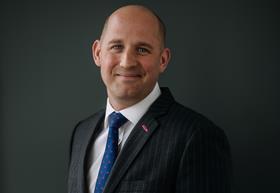
Baker believes that this trend is partly driven by an overarching organisational desire from businesses to be less reliant or impacted by insurance market cycles.
He explained: “We’re definitely seeing increased demand in that [ART] space. My sense is that [while we are currently in] a soft market and clients will see rate reductions for their lines of business in general, they’re also seeing a need to reduce reliance on market cycle dynamics.
“So, [if] they can get a captive [and a] more robust programme in place now, it means that when the market turns again at some point in the future, their programme is robust enough to try and mitigate [the] peaks and troughs within a market cycle cadence.
“The best time to set up a captive [is] in a soft market. The market is more sympathetic to restructures, you can change the capacity that exists above the captive working layer and then when the hard market hits, it’s quite unpredictable. [While] it’s hard to predict when that will happen, of course, if you try and set that captive up when the hard market has hit, you’re almost already too late.
“Having that pre-emptive structure in place means that, as a business, you can be more able to navigate that harder market cycle.”
Although acknowledging the uptick in captive interest, Baker did confirm that it is “fairly unusual” for an organisation to place all its risks within a captive.
For him, “a client’s appetite to retain an aggregated exposure is quite rare” because this can “really impact the overall balance sheet”. This is typically where risk transfer would step in and work alongside a captive, Baker added.
Since joining Insurance Times, Katie has successfully obtained a number of industry accolades. At trade body Biba's 2025 Journalist and Media Awards, for example, Katie was named the overall winner and received the Journalist of the Year trophy, alongside the Best Thought Leadership Award for her briefing article on reproductive health MGA Juniper and how insurance can be used to positively impact taboo subjects.View full Profile
















No comments yet