


















Trade associations publish joint report with short, medium and long-term action points on how to mitigate protection gaps, including a product design pivot to focus on outcomes rather than strict lines of business
Airmic 2026: Greater communication and engagement between risk functions, underwriters and brokers via committees or special interest groups, discussing areas such as policy wording clauses and subsequent claims responses, is vital to minimise insurance protection gaps.
This finding was one of the concluding recommendations published in a new collaborative report by trade associations Airmic and the International Underwriting Association (IUA), entitled Closing the protection gap: How insurance can evolve for an evolving risk landscape.

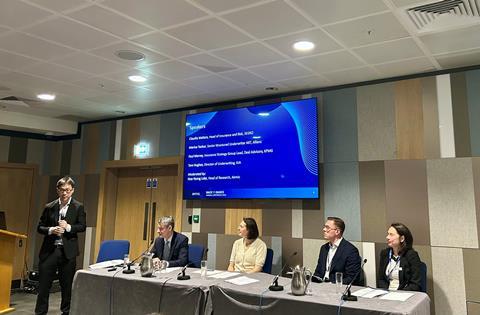
The joint report was launched during the Airmic Conference in Birmingham on 16 June 2026, with a follow up panel session digging into some of the research’s key focus areas taking place on 17 June 2026.
The report, which is based on feedback from a series of roundtables featuring Airmic and IUA members that took place during 2025 and 2026, details different types of protection gaps in terms of insurance provision and why they exist, as well as offers recommendations on practical steps that can be taken in the short, medium and long term to help mitigate identified gaps.
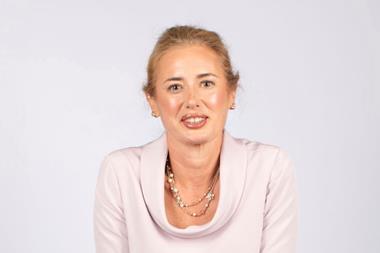
One of the report’s short-term action points was generating better tripartite engagement between risk professionals, insurers and brokers. Talking through the importance of this in the conference’s panel session, Claudia Walters, head of insurance and risk at real estate investment trust Segro, said: “[That] communication point is really important, that tripartite relationship.
“Often, [there are] Chinese whispers. So, I’ll have someone in my business who knows the risk. They’ll have to explain it to me. I’ll explain it to the client team at a broker, they’ll explain [it] to a placing broker, then it will go into the insurer and there might be numerous underwriters. They might [also] have a risk engineering team.
“I found that anytime you can shorten that chain, get everyone together, and it might be something as simple as [a call, is] a really great opportunity.”
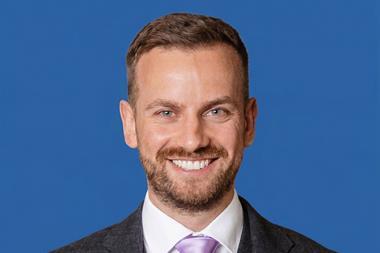
Tom Hughes, underwriting director at the IUA and one of the report’s authors, gave an example of how improved communications between insurers, corporates and brokers can help plug protection gaps, homing in on artificial intelligence (AI) and directors’ and officers’ (D&O) cover.
He explained: “A great example is a directors’ and officers’ insurance policy. The risk that’s being insured fundamentally is the dividends of that director [or] officer. Are they thinking really carefully about the way that their company is implementing AI?
“And if we can have better discussions between insurers and clients, we can demonstrate that absolutely, [the director is] thinking very carefully about the use of AI and that gives insurers the confidence to continue [providing cover] on the terms that they’re working on.”
Types of protection gaps
- Risks where insurance policies exist, but they are not taken up due to affordability, lack of awareness, available limits are too low to be meaningful, claims performance scepticism or belief that alternative risk transfer is more suitable.
- Risks where insurance cover does exist, but it does not work as risk managers envisioned – this could be due to ambiguous policy wordings, exclusions or narrow risk definitions. For example, non-damage business interruption clauses.
- Risks where no adequate insurance coverage is available – for example, insuring emerging risks, systemic risks, long-tail risks or intangible assets, such as intellectual property.
Source: Closing the protection gap: How insurance can evolve for an evolving risk landscape, Airmic and IUA, June 2026
Call to action
Another short-term step market practitioners can take is to review reactive exclusions, instigating a more consultative approach to new clauses that involves both risk managers and brokers, and gives them the scope and space to provide feedback to underwriters on the perceived impact of new wordings.
As for medium-term action points, the joint report advocated that proposal forms be swapped for higher quality, more detailed conversations with insurers, via mechanisms such as road shows or direct presentations, for example. This enables greater education of both parties – insurers to better understand increasingly complex sector-specific risks and corporates to understand available insurance options.
The report additionally proposed the introduction of more regular scenario testing as another medium-term goal. Hughes explained: “Clients want to look at a policy wording, point at it, sit with the insurer and say ‘so, can you tell me if this happens? If I experience this flood, will I be covered under this policy wording?’
“[This] is a challenge for insurers. They are not meant to be giving guidance or advice in that respect – it’s a really important role that the broker plays and the concern is that later down the line, if there was a nuance around the event that means that it wouldn’t have been covered, you haven’t really put the client in a good position.”
Keen to develop more IUA and Airmic events, Hughes added that the trade associations could pool resources on roundtables and exercises to “look at some template wordings that exist within different parts of the business and then look at some model scenarios and stress test wordings”.
Long-term calls to action featured in the report, meanwhile, include establishing a more appropriate capital structure to support insuring new emerging or systemic risks – this includes, for example, creating public-private relationships with government, using captives as an incubation model to develop data and experience, as well as the use of insurance-linked securities (ILS), particularly for cyber and climate risks.
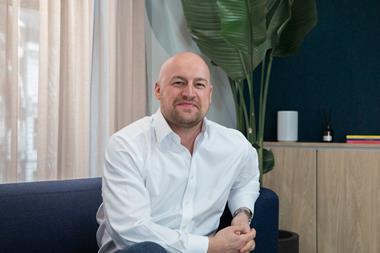
Paul Merrey, insurance strategy group lead, deal advisory at KPMG UK, added: “We need to think about the capital and involve capital quite early on. The world is changing so fast, we haven’t got 10 years to develop, design and implement the next product.”
Outcomes focused
The final long-term recommendation is around pivoting insurance product development – so rather than focusing on certain lines of business that are already well established, product development should instead concentrate on the outcomes that need to be achieved.
Currently, risk managers are having to purchase numerous policies to mitigate one risk, yet the report urges for more shared underwriting structures. For example, supply chain disruption requires risk transfer strategies to include contingent business interruption, political risk and trade credit covers.
Walters said: “If you can move away from [insurance] being purely transactional – we have a list of policies that we always buy, we renew them every year – it can be really beneficial.
“So often, insurance is just viewed as a transactional part of the business, it’s a cost to the business, it’s quiet and we don’t deal with it. It’s never really seen initially as enabler or something that brings strategic advantage. Because of that, we see that a lot of companies have no or very small insurance teams versus other areas of the business.
“The first step is if you have someone in your business who’s got the expertise and the time to deal with these things, that’s the first thing you need.”
The panel session was chaired by report co-author and Airmic head of research Hoe-Yeong Loke. It also featured Marina Tsokur, senior structured underwriter for alternative risk transfer at Allianz.

Since joining Insurance Times, Katie has successfully obtained a number of industry accolades. At trade body Biba's 2025 Journalist and Media Awards, for example, Katie was named the overall winner and received the Journalist of the Year trophy, alongside the Best Thought Leadership Award for her briefing article on reproductive health MGA Juniper and how insurance can be used to positively impact taboo subjects.View full Profile

















No comments yet