

























Insurance Times’ latest eTrading research revealed how brokers are changing the way they trade digitally, with speed, flexibility and access to more complex risks emerging as key priorities
ETrading has come a long way from its origins, when brokers primarily used it to place straightforward SME risks.

As digital platforms have developed, brokers have gained access to more complex products, more insurer options and increasingly sophisticated ways of placing business. But the latest Insurance Times eTrading report shows the market is now entering another stage of its development.
The 2026 version of the report, based on survey responses from more than 750 brokers across the UK, examines how brokers are using eTrading, what they want from digital platforms and where insurers can do more to make the process faster and more efficient.
One of its clearest findings is that brokers are becoming less wedded to a particular route.
Rather than choosing between an insurer extranet and a software house, brokers are increasingly using both – selecting whichever works best for the risk and their customer.
But the research also highlights some of the friction that remains.
While digital trading is expanding, 68% of referrals still take a day or longer to resolve, while 39% take two days or more.
At the same time, brokers are increasingly pushing for more complex commercial risks to be brought onto digital platforms.
Those findings were among the key themes discussed at the recent Navigating Excellence webinar that discussed the report’s findings, hosted by Insurance Times and sponsored by Aviva.
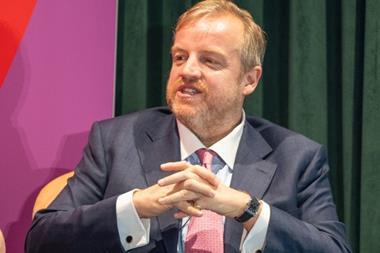
The sessions was hosted by Insurance Times editor Yiannis Kotoulas, who was joined by Insurance Times head of research Savan Shah, Aviva managing director of SME and delegated authorities Rebecca Gambrell, Aviva head of SME optimisation Christopher Whiting and Compare My Insurance chief executive Mark Thomas.
Brokers becoming platform agnostic
Perhaps the biggest strategic shift identified by this year’s research is the decline of the traditional “software house versus insurer extranet” debate.
Instead, brokers are increasingly taking a pragmatic approach to placement based on what delivers the best result for their customers.
Some 69% of brokers now mainly use a combination of insurer extranets and software houses, up from 61% in last year’s survey.
And when asked which route they would prefer if they had to choose just one, 54% selected software houses compared with 21% for insurer extranets.
Shah, who compiled the report for Insurance Times, described the finding as evidence that brokers are becoming more “pragmatic and outcome led” when they eTrade.
“Brokers are not necessarily loyal to one route and they’re choosing the route that really kind of helps them get the risk placed most efficiently,” he said.
Software houses can give brokers the ability to compare multiple insurers while entering risk information only once.
Indeed, 67% of brokers cited the ability to consistently compare as a key reason for using software houses, followed by only needing to key risk data once and ease of market search.
But insurer extranets continue to have an important role, particularly where they can offer greater flexibility around appetite, pricing, cover and service.
Thomas, whose digital broker places more than 70% of its business through eTrading, said his business currently uses Acturis to access multiple options for customers.
However, he suggested that direct insurer platforms could become more attractive if they offered a more flexible journey and reduced question sets.
He said: “It’s interesting to see what insurers do directly on their extranets regarding dynamic question sets. That will then maybe create a question for the market about which option is best for them as a business and best for their clients.”
For insurers, that means competing not simply on whether they can offer a digital route, but on how effectively that route works for brokers.
Speaking on the webinar, Whiting said Aviva’s approach was ultimately “broker-led”, with the insurer aiming to support brokers regardless of their chosen placement channel.
Aviva Fast Trade was rated five stars for the eighth consecutive year in this year’s report, with its overall score rising from 4.35 in 2025 to 4.43 this year.
The findings suggest the future of eTrading may therefore be less about one route winning over another – and more about insurers making sure their digital proposition works wherever brokers choose to trade.
Speed remains a major challenge
The report also highlighted a fundamental tension in the development of eTrading – digital journeys are becoming more sophisticated, but brokers still want answers quickly.
Read: ETrading set to be ‘core’ component for Markel UK as it bolsters capabilities – Lee Mooney
Read: Open GI launches new MGA landlord product
Explore more eTrading related content here, or discover other news stories here
Some 68% of referrals take a day or longer, while 39% take two days or more.
For brokers, the problem is particularly heightened when digital trading creates an expectation of speed, but a referral then introduces a lengthy manual process.
The Insurance Times research found that brokers were willing to accept longer question sets if they reduced referrals.
A combined 78% considered a longer question set at least moderately acceptable if it meant fewer referrals, provided the additional effort was proportionate.
The message is therefore not necessarily that every digital journey needs to be shorter, but that brokers want the information captured upfront to be useful and proportionate – reducing the stop-start process that can occur when a risk is referred.
The survey found that 72% of brokers had requested an underwriting referral in the previous 12 months because a risk fell outside standard underwriting appetite. System-generated referrals were cited by 60%, while 59% had requested a referral for pricing flexibility or a rate adjustment.
For insurers, improving appetite clarity, data capture and referral handling could therefore have a significant impact on the overall trading experience.
Aviva provides one example of how insurers are responding and Gambrell said 75% of its new business referrals are now handled within 60 minutes, compared with 37% a year earlier.
“We’ve really invested in making sure that we’re getting back quickly for the broker so they can go back to their customer and place the business really easily,” she said.
Thomas said the ability to get rapid underwriting support was crucial to his digital broker model, which is growing at 40% year-on-year.
The broker can submit business digitally while speaking to customers and use live chat with Aviva to get underwriting assistance.
“We don’t have that stop start process with clients,” he said.
For the wider market, the report suggests that reducing referrals – and making those that remain substantially faster – will be critical if eTrading is to continue expanding.
Increased complexity
The 2026 eTrading report also charted how far eTrading has moved beyond its traditional SME roots.
Brokers are increasingly looking to place larger and more complex risks digitally, with fleets, property owners, commercial combined and contractors combined among the lines now able to be traded via digital journeys.
Whiting said Aviva was seeing brokers wanting to place both “more business” and “larger business” through digital channels.
The insurer has expanded its mini-fleet acceptance criteria to support up to 20 vehicles at new business, rising to 30 at midterm and renewal. It also supports property owners risks with up to 20 locations and has modularised its commercial combined proposition.
More than 30% of Aviva’s new business policies are now also taking modular covers.
For Thomas, the development demonstrates how far eTrading has progressed. More than 70% of Compare My Insurance’s business is now placed digitally, with the business striving to eventually reach 100%.
“Our first port of call is to try and place all business via e-trade initially,” he said.
“If it doesn’t then progress then obviously we can take it to the more manual markets.”
Whiting said Aviva had delivered more than 190 enhancements to its proposition, pricing and user experience, including changes designed to make larger property owners risks easier to trade digitally.
The survey suggests this expansion is not simply about putting more products online. Brokers want digital trading to provide a genuine efficiency gain – and the research shows they will use it where it delivers one.
As Shah said, brokers are not digitising “for the sake of it”.
“They want to digitize when it saves time, reduces duplication and gets them to a better market view faster,” he said.
The report therefore points to a market where the next stage of eTrading will be defined less by whether a risk can be traded digitally and more by whether it can be traded digitally well.
For brokers, that means greater choice over how they access insurers. For insurers, it means making those digital journeys faster, more flexible and capable of handling increasingly complex risks.
And for the market as a whole, the data suggest eTrading is moving from being an alternative way of placing simple business to becoming an increasingly important part of how commercial insurance is traded across the board.

With a background in local journalism, she has previously worked as a freelance reporter covering community stories and gaining valuable on the ground experience.View full Profile































No comments yet