


















‘It’s not about relying on people to be ‘brave enough’ to ask – managers should be given the tools to cultivate their team culture in a way that provides psychological safety,’ says head of diversity, inclusion and community engagement.
With International Women’s Day (IWD) coming this weekend (8 March 2026), this year’s theme, ‘Give to Gain’, is an opportunity for reflection across the insurance sector.

The theme explores the “power of reciprocity and support” via ”knowledge, resources, infrastructure, visibility, advocacy, education, training, mentoring or time, contributing to women’s advancement”.
And, in many ways, this theme seems tailor made to address the retention of women in the sector – and particularly the advancement of women from middle management into senior leadership positions.
These days, flexible and inclusive policies have become a commonplace within the market – with the impact and effectiveness shown in shrinking gender pay gaps for senior leaders.
Indeed, EY recently revealed that the gender pay gap on UK insurance company boards dropped from 28% in 2020 to just 3% in 2024.
While this drop in the average pay gap shows irrefutable progress, the disparity in gendered pay bonuses may as well be the Grand Canyon.
In Insurance Times data analysis of the published gender pay gap reports from the country’s top 50 brokers, men received considerably larger bonuses – due to their greater representation in the upper half of earners – while women received just £0.36 in bonuses for every £1 paid to men.
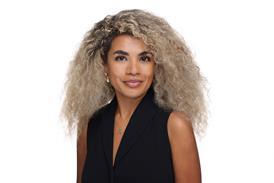
In response to these challenges, Miruna Constantinescu, customer and marketing director at The Acorn Group, told Insurance Times that, over the past year, the firm has completely overhauled its bonus framework to help plug the gap.
As women are statistically “less likely to negotiate on contracts”, Constantinescu explained that the group had standardised their bonus schemes calibration across the business.
This structural reform is also matched by a “proactive effort” to continuously upskill and diversify its managers and leadership teams to “support people in a variety of difficult situations”, she continued.
This includes manager training on conversations around suicide prevention, neurodivergence, mental health, financial wellbeing and flexible working.
She added: “When you foster a culture that is open and inclusive in that direct one-to-one conversation with a line manager that has a ripple effect and that translates into pay structures, recognition and promotion capabilities.”
’Self-fulfilling prophecy’
The existence of gender pay reporting and diversity is itself a success that has highlighted disparities that were once “a dirty secret”.
Read: Gender pay gaps at UK insurers revealed – the best and worst performers
Explore more diversity and inclusion-related stories here, or discover more news analysis here
That was according to Antonia Roberts, head of training and development at Empower Development, who added that despite policy and structural reforms designed to support career progression, women were still “opting out” of promotional roles.
Being unable to see senior leaders visibly juggling similar lifestyles or childcare responsibilities in these male-dominated leadership teams leads women to assume that “there isn’t a role for them”, she explained.
As a result, she stressed that lack of visibility in c-suite positions becomes a “self-fulfilling prophecy”.
She said: “A lot of companies are very open to part-time work, job shares [or] other ways of structuring work so that they can keep, retain and promote their talent.
“But there’s a disconnect, because there are women assuming that door is not open to them and there are companies that simply aren’t thinking about it. We need to shine a light [on that]”.
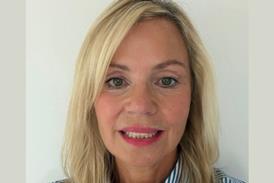
For Julie Humphreys, head of diversity, inclusion and community engagement at Markel, ensuring that managers are trained to have these conversations is integral to the success of inclusive policies.
Humphreys explained that “if women in one team within the business feel that using a policy may lead to judgement or slower progression, then that policy doesn’t work for its people”.
She said: “It’s not about relying on people to be ‘brave enough’ to ask – managers should be given the tools to cultivate their team culture in a way that provides psychological safety and then held accountable.”
Overcoming obstacles
Invisible barriers also require more investigation to support career progression for women.
Roberts noted that another overlooked obstacle for career progression, for example, is that “non-promotion tasks” still “disproportionately fall to women”.
She describes non-promotion tasks as those that do not contribute towards getting individuals recognised, provide experience or lead to promotions.
Common examples include responsibility for training juniors, organising meetings or team events, sending invites and taking minutes.
Tackling this relies upon increasing awareness, Roberts explained.
She said: “The more we can get the message out the better, but I still think those are basic messages that women are not really hearing.
“You’re not going to hear these gender messages unless you’re in a room full of women.”
Women’s networks have been known to be powerful hubs for inspiring confidence and mentorship across the industry.
At the start of this year, Constantinescu said that The Acorn Group launched its own women’s network and mentoring scheme, through which women can be matched with a senior leader in the business.
She explained that this was set up in response to the shift to remote working, in which women “may not have as many opportunities” as in the past.
The firm has also invested in its middle management for women, ensuring these staff have the opportunity for “one-to-one conversations” regarding “personal development plans”.
Not ‘lone ships’
As the rise in women’s networks across the sector suggests, promoting women into visible positions of leadership demands collaboration.
Ultimately, organisations are not “operating as lone ships”, Humphreys explained, and it is only as an interconnected community that “all talent can thrive”.
“We must continue to share resources with peer insurers, learn from each other and keep the conversation going,” she concluded.
“Not just for International Women’s Day or month, but 365 days a year, in every board room, meeting room, water cooler and coffee stand.”
While the conversation on supporting women’s progression should be continuous, as Humphreys noted, taking notes from this International Women’s Day ethos would not go amiss.

She joined the title after completing a Master's degree in Journalism in 2025, having previously graduated with a degree in English Literature.View full Profile




























No comments yet