


















After spending two years building AI-powered insurance software firm Parasol Platforms, the founder concluded the best way to demonstrate his vision for true transformation was to launch his own MGA and prove the model works
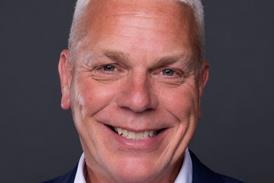
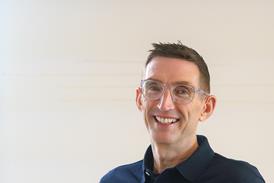
Kaspar Harsaae is a tad younger than most founders you see in the insurance industry, but it is this perspective that has informed his desire to modernise and update the insurance industry’s practices.
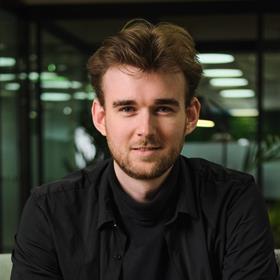
Having gathered experience across banking and the medical industry via summer placements, his insurance journey began in 2021 following graduation when he joined Aon Canada as a risk associate.
One of the first things he noticed when he got into the Vancouver office at Aon was piles of paperwork scattered across the desks. Initially, he assumed employees were simply catching up on admin after returning to the office following the pandemic.
However, he quickly learned that these piles of documents had arrived via fax machine – a jarring symbol of the contrast in technological adoption between insurance and the other industries he had experienced.
This frustration with the manual nature of many insurance processes was something he encountered repeatedly and it ultimately set Harsaae on a path that has led to the creation of Quorin Specialty, a London-based MGA set to launch in September.
And although the business has secured $60m of capacity for its launch into the energy and property markets, Harsaae says it is not just another MGA. Instead, he views it as a test case for a much broader ambition.
The insurance story
After joining Aon’s graduate programme, Harsaae rotated through a range of broking disciplines, including construction, mining and general practice.
Read: AI returns depend on redesigning job roles – Ericson Chan
Read: FCA says there is ‘already consumer appetite for AI’ and explains insurance impact
Explore more MGA-related stories here, or discover other interviews here
But alongside this day job, through internal schemes at the broker, he began building internal workflow and data initiatives.
Those projects eventually led to a role in Aon’s data analytics function, but they also convinced him that insurance’s digital transformation would most likely come from outside the industry rather than within established organisations.
After leaving Aon in 2024, Harsaae spent around seven months speaking to brokers, underwriters and insurance leaders across multiple markets to gather feedback.
The one idea that repeatedly surfaced during those conversations was that “there is a story behind every placement,” Harsaae tells Insurance Times.
This concept – creating a story from the data used in insurance placement – became the foundation for Parasol Platforms, which Harsaae launched in November 2024 after leaving Aon.
Harsaae argues that traditional insurance systems capture data points but frequently miss the wider context.
“Data on its own will never tell you everything,” he explains.
A placement may be influenced by broker negotiations, client behaviour, market conditions or dozens of smaller interactions that never appear in a policy administration system. And, for Harsaae, the challenge was creating software capable of connecting those dots across an entire placement journey.
The resulting platform was designed to bring together information from client meetings, emails, placement activity and underwriting decisions to create what he calls an “insurance story”.
The pivot
Parasol generated significant interest. Harsaae secured pilot projects, conducted discovery programmes and held discussions with brokers ranging from regional firms to global players.
However, the experience of integrating this technology into other businesses revealed a problem.
Harsaae explains that the software works best when firms adopt the whole vision but, in practice, most organisations wanted to utilise individual components rather than undertake wholesale change.
As a result, Harsaae says that its implementations increasingly became “bastardised”.
Clients would choose certain elements while excluding others, reducing the interconnected nature of the platform that he believed generated the greatest value.
And technology was not the only implementation challenge either – Harsaae and Parasol found themselves attempting to tackle the obstacle of organisational culture.
“I felt like it ended up being a legacy culture issue,” Harsaae says.
Many insurance leaders understood the value proposition, he explains, but introducing transformational technology into established organisations required significant internal support and political capital that executives were not always confident in providing.
These frustrations eventually led Harsaae and his team to take the unusual decision of stepping back from their software pilots altogether.
Rather than continue pursuing incremental, piecemeal adoption, they they were focused on the bigger potential upside. So they asked themselves, ”what if we built an insurance business around the technology instead?”.
Enter Quorin Specialty
The business that came out of this thought process was Quorin. Launching in September, the MGA will initially focus on renewable energy, energy, construction and property risks, having decided on these sectors as initial targets because of the expertise of co-founders and industry veterans Duncan Urquhart and Michael Morgan.
The business has also outlined plans to supplement its London presence by establishing a Dubai office before the end of the year, followed by the launch of a technology-powered broker in 2027.
Urquhart and Morgan bring decades of broking and underwriting experience to the business, which Harsaae is relying on to supercharge the potential of the technology platform he has built.
Crucially, the pivot into launching Quorin provides the team with what they struggled to find as an external software provider – complete control over implementation.
“We can control all the variables,” Harsaae says.
The same philosophy underpinning Parasol now sits beneath the MGA’s operating model, with the platform having been extensively adapted from broker software into the platform necessary for underwriting operations and designed to support everything from broker onboarding to policy lifecycle management.
Harsaae adds: “One of the biggest adjustments to the platform is around how we can best service capacity providers. They are kind of used to the status quo in terms of being provided with data, but we’re hoping to take that to another level by giving them direct portfolio access via a portal.
MGA 2.0
Quorin’s ambitions extend into building what Harsaae brands the MGA 2.0, driven by much more dynamic data partnerships with capacity providers – who he emphasises are the clients that must be focused on.
As risks are written at Quorin, he says backers will be able to monitor exposures, accumulations and portfolio trends in real time.
And although AI is central to Quorin’s proposition, Harsaae is keen to emphasise that technology alone is not the answer. The hurdle of culture that he encountered with Parasol has made this a focus for Quorin, he explains.
”The real objective is creating a culture of continual improvement, where underwriters and brokers can actively shape how the platform develops,” he says
“There will be iterative developments. Do you have an idea? Do you have a pain point? We want people to feel they can raise those things with us.”
Whether Quorin ultimately proves capable of transforming insurance remains to be seen.
But after spending years trying to persuade firms to adopt his vision, Harsaae has settled on a different strategy. Instead of telling the market what the future should look like, he intends to build it himself.
He finishes: “If we can make a minor difference and show people that you can do things differently, I’ll be happy with that.”

With a particular interest in regulation, technology, innovation and political stories, he has covered issues from the multioccupancy buildings scandal to the insurance implications of quantum computing and the growth of new markets.View full Profile























No comments yet