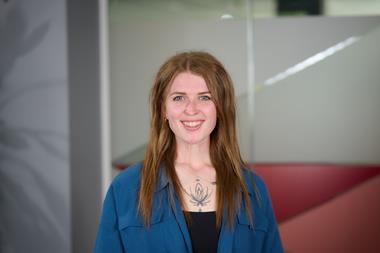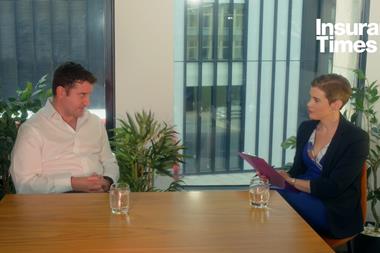





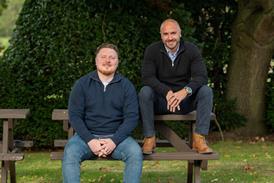
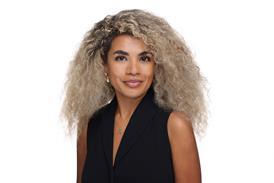

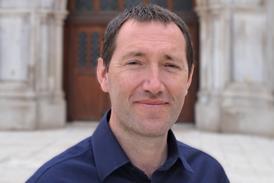

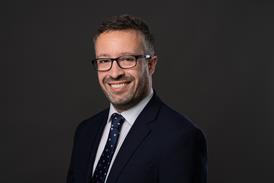








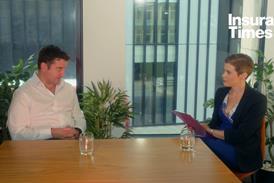

Sponsored content: Rafał Durasiewicz, co-founder at Acini, and Agnieszka Kowalik, senior business analyst at Acini, discuss how the tech firm tackles its talent hurdles
1. Acini functions as a teal organisation – what is this and how does it relate to the talent debate?
Rafał Durasiewicz: Teal organisations reject rigid hierarchy in favour of self-organising teams, whose members make decisions based on mutual trust, adaptability and co-operation.

Not only does this relate to recruitment, but is an integral part informing all steps in this process. At Acini, those decisions are also driven by our core values – quality, keep it simple, care for planet, transparency, acceptance and life balance.
This combination of skill, initiative and values alignment is essential and it defines the kind of talent we seek.
2. When recruiting new talent into the industry, how can companies ensure a cultural fit alongside the requisite core skills?
Agnieszka Kowalik: Acini hires mostly senior specialists because we believe in a reversed team structure – we want to provide our partners with experts who bring in real industry insight and vast experience.
When recruiting, we spend a considerable amount of time to ensure cultural fit. Rafał is particularly passionate when it comes to explaining our values and sharing views on the company direction. He also asks for feedback and examines personal alignment with the candidate’s set of beliefs.
Durasiewicz: After nearly 20 years in the insurance industry, I’ve learned that cultural fit and soft skills often matter more than hard skills.
To use a football analogy, my team, Legia Warsaw, has one of the biggest budgets in Poland, yet sits near the bottom of the table. Talent without cohesion simply doesn’t deliver results.
Only once we confirm cultural alignment do we move to the equally important technical stage. This ensures every new person strengthens both the competence and the compatibility of the team.
3. As a technology business in the insurance sector, how can you identify the right people to hire?
Durasiewicz: Our primary source of talent is recommendations from people already working at Acini. Trust is key in a teal organisation, so we lean on the collective know-how of the team.
We discuss potential candidates openly to make sure everyone is on the same page. This is how we maintain our culture, hire people with professional achievements and protect the integrity of Acini.
Kowalik: We check if we personally would like to work with a candidate. My project experience shows that most complex problems are never solved by one person alone, it usually requires cross-team engagement and collaboration. The right person needs to combine great professional skillset with human touch.
At Acini, the recruitment process is a series of conversations rather than standard interviews. The idea is to discover not only individual’s skills, but how they will be used to contribute to overall project success.
4. In discussions around talent shortages in the sector, what is the importance of partnering with organisations that can augment existing teams?
Durasiewicz: When it aligns with cultural fit, shared values, communication quality and relevant experience, nearshoring is often an optimal solution for insurers.
This model is particularly effective for Western European insurers when they choose from Central and Eastern Europe (CEE).
Acini, let’s not forget, is from Poland, a country consistently ranked among the top three globally for IT delivery quality, with strong English skills, a Western‑European work ethic and a mindset that integrates naturally with UK or EU projects.
This basically means insurers can augment their teams with specialists who feel like an extension of their own organisation – not a distant outsourcing vendor. They get high‑quality expertise, excellent communication and a cultural match that enables seamless collaboration and predictable delivery. As a result, they can focus on what they do best and rely on trusted partners for the rest.
Kowalik: For me an obvious benefit of consulting companies is that they accumulate talent with specific skills and provide hub of professionals willing to support each other with knowledge and experience.
We require less training and less onboarding time. We are like a highly-trained unit, who comes in, gets the job done and makes the customer is left with all necessary know-how to continue onward.
- For more information on Acini, click here