









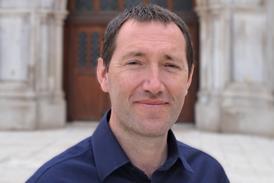














‘The more you mitigate claims, the more risk you can take on your balance sheet – and then insurance becomes a stopgap insurance, as opposed to just something I need for day-to-day activity,’ says division managing director
Airmic 2026: Risk transfer programmes are evolving to include a heavier mitigation focus, with risk managers looking to better understand their claims exposure and cover limit levels in order to use insurance policies more like a “stopgap” rather than “just something I need for day-to-day activity”, according to Simon Waine, UK corporate division managing director at broker Gallagher.

Speaking exclusively to Strategic Risk at the Airmic Conference in Birmingham this year (15 to 17 June 2026), Waine emphasised that more multinational corporates are seeking broker advice than ever before in a bid to get under the skin of claims exposures and implement mitigating measures to reduce organisational risk.
He continued: “[What] we’re seeing at the moment is [risk managers] not just saying ‘here’s my programme’ – it’s ‘what can I do to make sure I’m not exposed’ and then the insurance is there [just in case it is needed].
“It’s not ‘how do I insure [my risks]’, it’s ‘how do I mitigate [them]’.”
Waine noted that in conversations he was having with firm financial directors, many of these leaders were pivoting their perspective from seeing insurance programmes as a “hassle” that just needed renewing each year, to instead looking to do “as much as I can to reduce the amount of claims I have”.
He added: “Fundamentally, the more you mitigate claims, the more risk you can take on your balance sheet. And then insurance becomes a stopgap insurance, as opposed to this is just something I need for day-to-day activity. We’re definitely seeing a lot more around that.
“[This] means [brokers] then have to provide [corporates] with that level of service – they want risk engineers on site. When they have a claim, they want forensic accountants there to help them, they want business interruption experts there to help them.”
Corporates are increasingly quizzing brokers on their “actuarial resource”, potential premiums for programmes and what risks could be retained on balance sheets too, Waine commented, confirming that Gallagher’s clients, for example, are “asking for more advice” today than they have historically.
Looking at limits
As well as getting to grips with claims causes, Waine said that multinational businesses are more closely looking at the nuances of their insurance policy details. For example, rather than exploring different lines of business to purchase, risk managers are instead looking at the limits of their current policies – and whether these are fit for purpose.
Read: Gallagher partners with MGA over parametric golf course flood protection
Read: Gallagher appoints two chief executives for specialty division
Explore more broker related content here, or discover more news here
He continued: “If you go in [to a multinational business] as an [insurance] expert and talk to your clients about the options they have for insuring their business, in the past they hadn’t had those options explained to them and their eyes [had not] been opened – so I think [businesses are] looking at more ways of structuring their programme so [that] it works best for them, as opposed to buying different covers they’ve never bought before.
“[Corporates have] got all the covers they need. It’s just not necessarily at the right limits, or they haven’t thought about the limits they’re buying, or why they need that level of insurance. That’s the change we’re seeing, is people wanting to know why they need to buy a certain level [of insurance].
“There’s quite a lot of interest in what are their peers buying [too], what are competitors buying? [For example,] why do we buy this if they’re buying that? What are we seeing that they’re not, or vice versa?
“[Businesses] want data to enable them to make decisions, so it’s not about a product that’s coming to the market – it’s more about the programme, the limits [and] how much self-insurance they take.”

Since joining Insurance Times, Katie has successfully obtained a number of industry accolades. At trade body Biba's 2025 Journalist and Media Awards, for example, Katie was named the overall winner and received the Journalist of the Year trophy, alongside the Best Thought Leadership Award for her briefing article on reproductive health MGA Juniper and how insurance can be used to positively impact taboo subjects.View full Profile




























No comments yet