
















Insurance Times speaks to DWF’s Kes Earl, 2025’s winner of the Young Achiever in Claims or Fraud Award, as the 2026 Claims Excellence Awards approach
1. What has winning the Young Achiever in Claims or Fraud Award meant for your career and how has it helped you since?
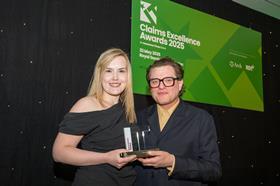
Winning the Young Achiever in Claims or Fraud Award was a really important moment for me. It confirmed that the work I was doing in organised fraud, particularly within the casualty space, was making a genuine difference and being recognised by the industry.
Since winning the award, it has helped raise my profile both internally and externally.
Internally, it has given me more opportunities to lead projects, develop new intelligence initiatives and contribute to strategic discussions.
Externally, it has been a talking point amongst clients and has opened up more chances to work closely with them in this space, adding credibility to the initiative I was already driving and allowed me take part in wider industry conversations with external agencies as well.
2. What advice would you give young professionals aiming to make an impact in claims?
Don’t wait to be called upon.
If you see an issue and have a solution, speak up. It’s easy to become focused on claims purely on their individual merits, but a fresh set of eyes can often bring a wider, more holistic perspective that adds real value.
Take ownership of your ideas and be proactive in figuring out how to turn them into something that makes a difference.
3. How are firms supporting upcoming talent when they first enter claims or fraud roles – and where do you think the industry needs to place greater focus in developing that talent?
When I first started in claims, I had a fantastic supervisor who, once I had my feet under me, trusted me to take on new challenges and think outside the box.
Read: Insurance Times Claims Excellence Awards finalists 2026
Read: Who triumphed at the Claims Excellence Awards 2025?
Explore more claims related content here, or discover other news stories here
Having that support and freedom to explore cases from different perspectives allowed me to branch out, diversify my skills and ultimately carve out my own space within fraud.
DWF has a really positive working environment that encourages new ideas and gives people the confidence to take ownership of them and even present those ideas directly to clients.
In terms of the industry as a whole, the real opportunity lies in paying attention to the junior staff who quietly get their head down every day and consistently do a good job.
Sometimes they just need a bit of encouragement or a push in the right direction, but more often than not, behind that hardworking individual is a wealth of ideas and innovation waiting to be given the opportunity to shine.
Creating a positive environment where people know their ideas will be valued and explored goes a long way in creating teams that are prepared to disrupt and innovate.
4. As an innovator looking to “disrupt”, what are some notable trends in organised insurance fraud in the UK that you are seeking to combat?
My work focuses on medically enabled fraud and increasingly we are seeing cases where medical experts themselves are being exploited.
In some instances, the individual signing off the report is not the professional who actually carried out the assessment, or the report is produced in name only.
This can involve the use of secretarial agents or automated document‑production software, often with little genuine oversight or awareness from the named medical professional.
These practices present a serious risk to the public. We are seeing claimants assessed by individuals posing as experts, sometimes through the misuse of stolen identities, which fundamentally undermines the integrity of the medical evidence and the claims process as a whole.
5. Looking ahead, what do you think will be the biggest challenge for claims and fraud professionals in the insurance industry?
It probably goes without saying that artificial intelligence (AI) represents one of the biggest challenges for claims and fraud professionals.
As the technology becomes more sophisticated, it creates a constant race for detection tools to keep up.
One of the key difficulties is that developments are often unpredictable, meaning fraud detection is frequently reactive rather than preventative and inevitably a step behind the latest advancements.

She joined the title after completing a Master's degree in Journalism in 2025, having previously graduated with a degree in English Literature.View full Profile
























No comments yet