












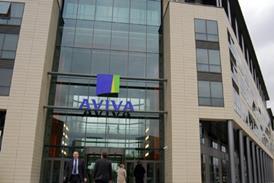











‘We are investing our capital, investing our time and our capacity into the MGA market because the MGAs are the specialists,’ says head
The future of the MGA sector lies in deepening its specialist expertise and insurers should not take that niche knowledge “for granted”, or assume it is possible to bring it entirely in-house.

This is according to John Andrews, head of global hybrid fronting at Aviva, who was speaking yesterday (7 July 2026) at the 2026 Managing General Agents’ Association (MGAA) conference, on a panel titled, Head-to-Head: As a sector, what do we need to design now to succeed in the future?
The remit of the MGA market has broadened in recent years, with some firms operating from increasingly generalist positions. Andrews, however, rebutted this trend, saying that the power of the sector lies in its niche market knowledge.
“MGAs are the specialists. We are investing our capital, investing our time and our capacity into the MGA market because the MGAs are the specialists,” he said.
“I think that the insurers in the Lloyd’s market haven’t got that knowledge, hence why we are delegating to them. Yes, we can learn stuff from them, but it’s not something that we can actually do in-house.
“From my perspective, the MGAs of the future are going to be going down that real specialist route and being a bit more accountable for their sector of the market.”
Ceded space
Graeme Rayner, chief underwriting officer at Ryan Specialty International, added that the success of the MGA market could see insurers attempt to win back some ground. To defend against this, he said, firms will need to double down on their innovative qualities.
Read: MGA-owned golf specialist announces industry first as two new deals made
Read: Gallagher partners with MGA over parametric golf course flood protection
Explore more MGA-related stories here, or discover other news stories here
He explained: “I think there’s something interest going on in the market in as much as the balance sheet carriers have actually ceded space [in the innovation and tech market].
“That’s a dangerous position for them to put themselves into, to cede some of innovation to the MGA market. You cede the space – do you ever get it back?
“I think the challenge for the MGA market is to make sure that the balance sheet carriers don’t get it back and that we keep pushing and pushing and we build those platforms and make those designs that are going to be successful going forward.”

He graduated in 2017 from the University of Manchester with a degree in Geology. He spent the first part of his career working in consulting and tech, spending time at Citibank as a data analyst, before working as an analytics engineer with clients in the retail, technology, manufacturing and financial services sectors.View full Profile

































No comments yet