























’In larger insurer environments, some underwriters may feel more removed from individual risks,’ says managing director
Despite softer market conditions and increasing competition affecting the UK insurance industry, MGAs are proving themselves to be very resilient.

According to data from Insurance DataLab, published on 1 July 2026, certainty in MGAs has not stalled, with aggregate revenues increasing by 8% to £1.2bn over the past year.
This report also showed that MGA productivity remained resilient at 56.1%, supported by a 12.2% increase in average revenue per employee to more than £203,000.
“The findings suggest the market is maturing rather than weakening, with firms increasingly focused on building sustainable, profitable businesses instead of simply chasing top-line growth,” the report added.
So, given MGAs can carry out investments while maintaining impressive levels of productivity, are they becoming more attractive career destinations for underwriters across the market?
Mike Keating, chief executive at the Managing General Agents’ Association (MGAA), told Insurance Times that while larger corporate insurance firms have strong training programmes and opportunities, underwriters can have the ability to express their skill set more readily at MGAs.
He said: “MGAs are an entrepreneurial environment, there is cause and effect in terms of you as an individual and there’s an opportunity to create value for yourself personally, as well as the business overall.
“If you look at the antithesis in terms of where a lot of that talent is moving from, it’s effectively a little bit of frustration in terms of the labyrinth of committees and big corporate organisations – a lot of new talents see that it’s suppressing their skill set and also not allowing them to express their skills, be that in underwriting, be that in distribution, be that in oversight compliance.
“All those sorts of roles – MGAs are really at the tip of the spear on.”
Moving from insurers?
Given the popularity of MGAs, it is no surprise that more of these firms are entering the market.
Read: London market hiring slows despite growing talent shortfall
Read: Talent tops brokers’ priorities, Mission survey finds
Explore more MGA-related content here, or discover other news stories here
For example, Mission, an MGA capital partner building insurance businesses around experienced underwriting talent, has helped more than 30 MGAs in the UK and US to launch since 2021.
Most recently, it launched Amulet Specialty in July 2026, an MGA specialising in property, casualty, liability and business interruption in the UK.
One thing to note about these firms is that they focus on niche market knowledge and can bring underwriters closer to such risks.
Alison Williams, managing director at Prestige Underwriting, said that MGAs are attractive “because they give people real proximity to decision-making”.
So, does this make MGAs more attractive for underwriters than larger insurers? Williams said: “I would not say underwriters are more willing to work at MGAs in every case because insurers still offer excellent careers and development routes.
“However, MGAs can be particularly attractive to underwriters who want to be closer to the risk, closer to brokers and closer to the commercial outcomes of their work.
“In specialist lines, that matters. In non-standard home, for example, there is only so much an algorithm can tell you. You still need experienced underwriting judgement, supported by good data, pricing discipline and a clear understanding of the customer’s circumstances.”
Andy Hurrell, founder and managing director at Corin Underwriting, echoed this view, saying that while both models have an important role, MGAs can be particularly attractive to underwriters who want more autonomy.
“In larger insurer environments, some underwriters may feel more removed from individual risks,” he added.
“In an MGA, especially in a specialist class, the underwriter is often much closer to the broker, the client, the capacity provider and the claim. For people who enjoy underwriting as a craft, that can be very compelling.”
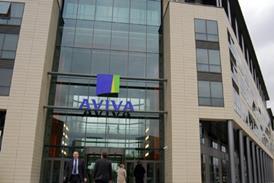
One example of underwriting talent switching to an MGA include Euna snapping up some of Aviva’s private client team.
On 1 July 2026, Euna launched its personal lines proposition with the introduction of a specialist home proposition, appointing experienced underwriters Simon Goddard, Stuart Rickett, Craig Woolley and Sam Gardiner.
Goddard and Gardiner both joined from Aviva.
Keating said: “There are lots of very good underwriters in insurers who are very comfortable in that big corporate environment, but now there’s a clear runway of perhaps more people moving out of that corporate way into the MGA world and you’ve got a lot of very attractive MGA models for people to talk to.”
AI impact
Another factor that could influence underwriter career paths is technology and how much artificial intelligence (AI) is used in a firm.
According to KPMG’s 2025 Insurance CEO Outlook, published in January 2026, 67% of bosses anticipated seeing a return on AI investment within one to three years, compared with 21% in 2024.
Nearly three-quarters of respondents said AI was now a top investment priority, with many insurers deploying it across underwriting, claims processing, fraud detection and customer service.
Joe Hantson, deputy chief executive at Direct Commercial, explained that the question is not whether insurers or MGAs invest more in AI, but whether the investment helps experienced underwriters make better decisions.
He continued: “Across the MGA market, AI may become a tool to enhance underwriting efficiency but the strongest firms will be those that combine data, technology and judgement with firm discipline.”
Nick Grazier, group customer acquisition and engagement director at Bspoke Group, said that “as technology and AI take on more of the administrative and data heavy aspects of underwriting, underwriters are increasingly looking for roles that allow them to spend more time applying judgement, building relationships and underwriting risks”.
He added: “MGAs are well placed to offer this, particularly as they are often more specialist, agile, offer greater underwriting authority and the opportunity for faster decision-making.
“MGAs can also offer a much closer alignment between what an underwriter brings and the outcomes that this provides.
“By contrast, incumbents with legacy systems can find it harder to roll out tools at speed that make underwriters’ day-to-day roles less administratively burdensome.
“The best talent is looking for the autonomy, modern technology and opportunities to build specialist propositions, that MGAs can bring rather than simply chasing salary increases in an environment where they can have less of an impact.”
War for talent
Grazier continued that “the war for talent in the MGA sector remains intense, particularly for experienced underwriters and specialist insurance professionals. Talent attraction and retention is still one of the market’s biggest challenges”.
Reinforcing this view and speaking at a London Market Group (LMG) press conference on 6 July 2026, chief executive Caroline Wagstaff said market recruitment had slowed significantly, adding that “hiring is down by 25% last year and it’s predicted to be down by another 25% this year”.
Grazier said “MGAs that combine specialist expertise, strong governance, modern technology and see data as a strategic differentiator, are becoming employers of choice, while those that fail to invest in people and platforms will find recruitment increasingly difficult”.
Williams added that “talent wants purpose, development, stability and confidence that the business is being run sustainably”.
She added: “The MGA sector has grown quickly, but the next phase will reward businesses that can combine entrepreneurial energy with underwriting discipline, operational resilience and long-term partner confidence.”
Meanwhile, when it comes to looking at bringing in new young talent, Hurrell pointed out that the “MGAA’s Next Gen programme is a good example of the MGA community recognising the need for training, mentoring and career development”.
Through educational, networking and social events, the scheme supports MGAA members in achieving their professional and personal development goals, equipping them with enhanced technical and soft skills.
“The wider market also needs to invest properly in the next generation,” Hurrell said.
“At Corin, our own Next Gen committee is designed to give emerging talent a voice and help develop the underwriters and claims specialists who will lead the business in future.
“That is how MGAs move from being attractive places to work to being sustainable career platforms for the next generation of insurance professionals.”

His career began in 2019, when he joined a local north London newspaper after graduating from the University of Sheffield with a first-class honours degree in journalism.
He took up the position of deputy news editor at Insurance Times in March 2023, before being promoted to his current role in May 2024.View full Profile
































No comments yet