













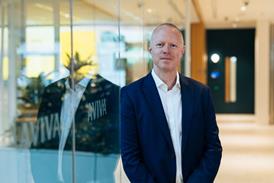













‘Securing £50m of capacity and underwriting authority is an important milestone,’ says chief executive
New MGA Ragado has secured £50m of capacity and delegated underwriting authority through a five-year agreement with Accelerant, Insurance Times can reveal.

The Cardiff-based firm was founded by industry veteran Lyndon Wood, who announced earlier this year on LinkedIn that the firm would go live in April 2026.
Ragado will initially underwrite commercial insurance through independent brokers and directly to businesses, using what Wood describes as a technology-led model built specifically for the artifical intelligence (AI) era.
It is developing proprietary technology, intellectual property and AI frameworks across its operating model, including underwriting decision support, risk analysis, portfolio intelligence, operational controls and workflow orchestration.
The agreement provides the capacity for Ragado to develop its business, with Wood saying the venture has been created without the legacy systems and processes of traditional insurance operations.
“Securing £50m of capacity and underwriting authority is an important milestone, but the more interesting story for me is what we can build on top of it,” Wood, who also serves as chief executive, said.
“We started with a blank sheet of paper, no legacy. If you were designing a risk and distribution business today, with everything now possible through AI, data and modern technology, why would you replicate an operating model designed decades ago?
“We’re not trying to digitise the old model. We’re asking what the model should look like next, first principals.”
Return to market
Wood previously built Moorhouse Group and constructaquote.com over 32 years before the business was sold to private equity in 2021.
Read: Bspoke expands distribution team with two senior hires
Read: MGA launches pension trustee liability offering
Explore more MGA-related stories here, or discover other news content here
Ragado marks his return to building an insurance business, with the company describing commercial insurance as the starting point.
The venture’s longer-term ambition is to move commercial insurance towards a model of continuous risk understanding, using technology to identify changing risks earlier and support loss prevention.
Wood said insurance had historically relied heavily on “looking backwards” through historic claims and information, while AI could allow insurers to become more forward-looking.
He said: “The opportunity now is to start looking forwards.
“If intelligence can help an underwriter identify changing risk earlier, help a broker understand something about their client they couldn’t previously see, or help a business prevent a loss before it happens, that changes the value proposition considerably.
“That is where this becomes much bigger than simply making insurance administration faster.”

With a background in local journalism, she has previously worked as a freelance reporter covering community stories and gaining valuable on the ground experience.View full Profile






























No comments yet