





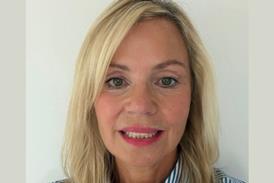

















’There is a gap within loss adjusting, particularly as you get towards the more major and complex loss areas or departments in any business,’ says HR director
Succession planning is “very difficult” within loss adjusting because of a talent shortage in the sector.

That is according to Claire Fisk, HR director at Woodgate and Clark, who said there is a “gap” when it comes to bringing in young talent, “particularly as you get towards the more major and complex loss areas or departments in any business”.
According to Gallagher Bassett’s The Carrier Perspective: 2026 Claims Insights report, published 17 February 2026, nearly a quarter of UK insurers (22%) identified talent attraction and retention as the top business challenge in 2026.
The report, which surveyed 250 senior insurance leaders across the UK, Australia and North America, revealed that 72% of UK survey respondents reported an increased difficulty in finding qualified candidates.
As a result of the difficulties in brining in young talent to the industry, Woodgate and Clark revealed in 2021 that over 64% of its adjustors were over the age of 50, while 17% were in their thirties.
“Succession planning and key dependency mapping we [have] as the two main ways of identifying gaps within the workforce,” Fisk told Insurance Times.
“For me, succession planning is very difficult within loss adjusting because, as we all talk about, there is a talent shortage.”
She added: “There is a gap within loss adjusting, particularly as you get towards the more major and complex loss areas or departments in any business.
“You can see that from how businesses interact with recruiters, with one another and with talent in general, but there is a gap there.
“We will only be able to fill that gap if we can crack advertising loss adjusting as an attractive career choice for younger generations.”
Support staff
However, Fisk also noted that the industry does “overlook” the value support staff bring – and that their knowledge should be tapped into more.
Read: Nearly a quarter of UK insurers say talent shortage is top business challenge
Read: Linking insurance and education bosses can provide ‘huge’ benefits for talent
Explore more talent-related content here, or discover more news analysis here
She said: “We have such talented support staff and we are missing an opportunity to tap into their knowledge, particularly their corporate knowledge and corporate history, to then help them progress as well.
“By implementing succession planning or embedding succession planning in particular departments, you’re essentially saying that this is not a one-size-fits-all, but actually your role encompasses all of these things and those align to some of the things that loss adjustors do.
“We’re all very quick to look at those people and think ‘that’s a huge jump’, but it isn’t. So, we do an awful lot of succession planning with some of our support staff and then the key dependency mapping tends to be more at senior level.”
Signing the charter
Fisk made the comments after signing Insurance Times’ Destination Insurance Charter.
The charter forms part of Insurance Times’ broader talent campaign – entitled Destination Insurance – which aims to support the UKGI industry to mitigate its unique talent challenges by instigating market-wide collaboration and being a prominent source of best practice information, ideas and insight.
Fisk said embedding the charter “directly into our people strategy is probably the best way to do this for Woodgate and Clark and the size that we are”.
She added: “What I mean by that is our strategy at the moment has four specific strands and for me, this sits very neatly in the learning and development and the talent acquisition strand, so ensuring we pull out all of the commitments within the charter and align them very specifically to my objectives at any given point in any given year.”
She added: “It is not just us that suffers from a talent shortage and, to some extent, we all have to play our part in becoming training grounds and positive environments for people to join.
“Otherwise people will come into loss adjusting, they might not see it as a particularly positive environment and they’ll leave.
“So, I would be aligning [the charter] completely with our people strategy.”

His career began in 2019, when he joined a local north London newspaper after graduating from the University of Sheffield with a first-class honours degree in journalism.
He took up the position of deputy news editor at Insurance Times in March 2023, before being promoted to his current role in May 2024.View full Profile





























No comments yet