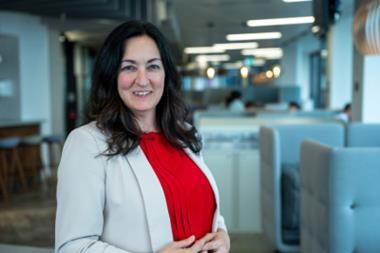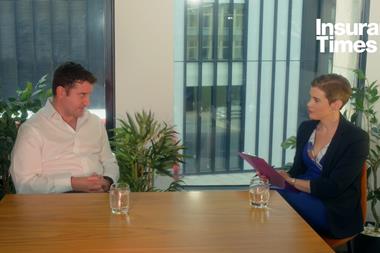


















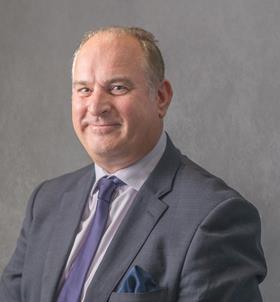
Sponsored content: Nigel Spencer, distribution leader at Intact Insurance, shares his insights on why natural catastrophes and extreme weather risks have become defining issues for the industry – and what steps can be taken to safeguard the future of renewable energy
1. How and where are natural catastrophes threatening renewables projects?
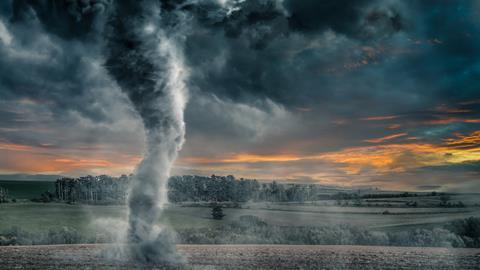
Due to their location and construction materials, renewables projects are more vulnerable to secondary perils than traditional property risks. Key threats include windstorms, wildfires and hailstorms, which are increasingly impacting assets across regions such as Europe, the Middle East and Australia.
2. How are the frequency and severity of claims rising?
At first glance, rising claims may appear to be the result of more frequent and severe weather events. However, they can also be linked to the much wider global development of renewable energy and the size of values at risk concentrated at each site.
A notable trend is the emergence of losses in areas where no previous infrastructure existed and where weather data has not been recorded. For example, we’ve seen significant losses in areas like the Middle East which would not have been anticipated by prior catastrophe models.
3. Are insurers rethinking their exposure in the face of rising claims?
Experienced insurers are reassessing their exposure to catastrophe-related risks, often by limiting line sizes or applying stricter catastrophe limits. However, as the market continues to evolve, newer or less experienced entrants may still offer terms that don’t fully reflect these emerging lessons.
4. What are the long-term strategies that the renewables industry can adopt in the face of these risks?
The renewables sector is still maturing and currently lacks the structured placement solutions seen in more established property classes like excess layers or catastrophe reinsurance options. That said, the market is moving in this direction, which will enable more targeted deployment of critical catastrophe capacity.
Another key development is the refinement of catastrophe modelling tailored to renewables. Traditional models often have gaps in regions lacking historical weather data or infrastructure. As loss experience grows, secondary perils are being better mapped and integrated into global catastrophe models by major markets.
5. How are risk and insurance solutions evolving to help better manage volatility and uncertainty?
There’s significant innovation underway to mitigate damage through technology. In solar parks, for instance, early warning systems are enabling panel storage ahead of adverse weather and panel designs are becoming more robust.
Lessons from past incidents are also informing site selection and risk management. For example, wildfire-prone locations now require approved firebreaks and vegetation control measures.
At the same time, insurers need to be involved early in the process, working alongside developers to assess exposures and ensure that innovation projects remain viable in higher-risk environments.
Being part of the conversation from the starts means we can help shape solutions that balance protection with the economics of new technologies. Fundamentally, insurance allows projects with catastrophe exposures to get financed as banks and lenders need security to make necessary investments.