






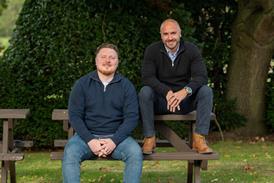


















’It’s no longer a big bang change programme,’ says president
A major report that emerged in February 2026 was that Lloyd’s had allegedly shelved Blueprint Two.

Launched in 2020, Blueprint Two is Lloyd’s road map for digitising the London market. The insurance marketplace labelled the initiative – designed to be implemented through two phases – as its “ambitious strategy to deliver profound change in the market through digitalisation”.
However, the programme has continued to experience milestone setbacks over the last few years, including multiple delays.
Following this, on 9 February 2026, City AM said that sources familiar with the situation have claimed the project ”has been quietly shelved, with the team responsible for market engagement disbanded at the end of last year”.
It also reported that “it is understood that new leadership at Lloyd’s is exploring different strategies to draw a line under Blueprint Two and ’the toxicity associated with it’.”
In response, Lloyd’s said it remains ”absolutely committed to supporting the re-platforming of the market to a resilient, cloud-based operational infrastructure”.

So, what’s going on with Blueprint Two? Kim Darrington, director of market operations and transformation at the International Underwriting Association, believes that while there have been some “false starts”, it will be delivered.
“It seems peculiar to call it Blueprint Two, but I appreciate we’ve got no other name for it,” she said.
“I have confidence that the market will move, progress and become a fully digital marketplace.”
‘Disillusionment’ at delays
Blueprint Two piggybacks off its predecessor plan, Blueprint One, which was published in September 2019 after the marketplace formally revealed its Future at Lloyd’s digital transformation strategy in May 2019.
Read: Tiernan explains importance of clear timeline messages after latest Blueprint Two delay
Read: Lloyd’s of London is ‘a highly compelling platform for third party capital’
Explore more London market-related content here, or discover more news analysis content here
The goal is to modernise how insurance is placed, processed and claimed within the Lloyd’s market.
However, in June 2024, Lloyd’s announced that the twice delayed phase one would be further delayed into 2025. Its technology provider supporting the project, Velonetic, then confirmed that Blueprint Two’s phase one cutover had been pushed back further still into 2026.
Lloyd’s chief executive Patrick Tiernan went onto announce in September 2025 that the marketplace does not expect the re-platforming element of Blueprint Two to be completed before 2028.
While delays to Blueprint Two’s proposed deadlines were perhaps understandable and expected during the Covid-19 pandemic years between 2020 and 2022, Ben Rose, president of reinsurance platform Supercede, said that the general response from the market to more delays has been “one of great frustration from waiting and, in the end, total disillusionment”.

“You look at where we’ve gone from – something setup in 2019 and expected to deliver by 2022 – we’re now talking about the earliest anything gets delivered being 2028,” he said.
“Therefore, in people’s minds, anything that Blueprint Two can now deliver is probably beyond their near-term career horizon wherever they are working.”
However, Christopher Croft, chief executive at the London and International Insurance Brokers’ Association, said it should not be a surprise that it has been difficult to deliver, given this is being implemented across an entire marketplace.
“It is an absolutely vast programme,” he said.
“If you look at the number of people who’ve been involved in it, in terms of developers and technical staff, it’s much bigger than any of our members would really consider viable as a programme.
“But it is what it is and you’re trying to deliver it in a marketplace of 350 competitive firms, not in a single organisation, and that’s really difficult.
“So, I don’t think anyone should be surprised that it has turned out to be quite hard.
“[However], we’re far closer to resolving this than we ever have been in previous iterations of what’s been fundamentally the same idea and now is not the time to lose faith.”
Plan going forward
So, what is the plan going forward?

Firstly, Tiernan highlighted in September that market testing will not commence before 2026 and that when it does commence, due to earlier design choices, extensive testing is vital to verify that the re-platforming will deliver to the market’s needs.
He also said that “we are committing to keeping heritage systems operationally resilient until at least 2030, so the market can be assured of long-term stability”.
Joe Brace, operations director at the Lloyd’s Market Association, said that the expectation is for Velonetic to continue to maintain and invest in a highly resilient infrastructure to at least 2030.
“Velonetic provide regular updates on operational resilience to the associations, Lloyd’s and committees across the market,” he said.
On re-platforming, meanwhile, he said the Lloyd’s market needs to maintain the momentum towards digitalisation.
“Data standards are the key to modernisation,” Brace added.
“From an LMA point of view, my call would be to keep Acord standards at the heart of any form of change.”
Meanwhile, Rose felt that the “original big picture revolution” of Blueprint Two is not “something that is still on the menu to be delivered in quite the same way”.
He added: “Do I think, on the other hand, that the basic core remaining parts of Blueprint Two should and will still be delivered? I think they will be.
“Ultimately, they are going to be much more evolution than revolution and it is going to be simple bits like putting in place standard data requirements for different parties, getting the functional exchanges working as smoothly as they can do, phasing in and out legacy bits of technology or heritage bits with more appropriate bits as the time comes about.
“But it’s no longer a big bang change programme. It is an iterative one instead and that’s a much safer one, especially going into a softening market.”
Darrington echoed these thoughts, believing it will be delivered in an “incremental fashion”.
She said: “The market has made no secret of its desire to look at an alternative to a full service cutover big bang event, the obvious risk with that being full service cutover leaves the risk of full service failure in the event of any problems.
“So, it makes sense that we try to do this in a more incremental fashion, that the market has better time to prepare themselves in terms of their own systems and their own processes and their collective efforts around that.
“It has meant that there is the requirement for something of a replan. So, it has added some time onto the already pushed out deadline.
“But this is not a once and done event, this needs to be a continual evolution. The market needs to embed this into its DNA.”

His career began in 2019, when he joined a local north London newspaper after graduating from the University of Sheffield with a first-class honours degree in journalism.
He took up the position of deputy news editor at Insurance Times in March 2023, before being promoted to his current role in May 2024.View full Profile






























No comments yet