






















Insurance Times content director Katie Scott reviews the headline findings of this year’s Top 50 Insurers report, flagging where firms are winning, losing – and battling the soft market
Welcome to the 2026 edition of Insurance Times’ exclusive Top 50 Insurers report – our annual ranking of the biggest and best performing UK general insurance (UKGI) underwriters across the UK, Gibraltar and Lloyd’s of London, delivered in collaboration with market intelligence firm Insurance DataLab.
One of the key trends this year is the wildly varying peaks and troughs some insurers have experienced over the most recent 2025/26 financial reporting period – perhaps the first trading period of note that has solely been calculated during a soft cycle – with vast gross written premium (GWP) climbs and falls seeing plenty of switching throughout the final table. More so than in past years to my eye.

However, one section of 2026’s list remains cemented in place – the podium finishes of first, second and third.
Mirroring 2025’s medal positions, the same ternary of alliterative insurers – Aviva, Axa and Allianz – have screwed their spots even more firmly to the sticking place to lead this year’s Top 50 Insurers cohort, which now represents more than £95bn of market-wide GWP in total.
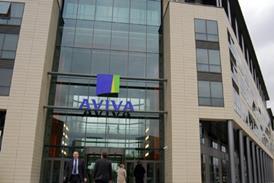
Dame Amanda Blanc’s behemoth Aviva retains first place in 2026’s ranking for the third consecutive year, recording 2025/26 GWP that is nearly £5bn higher than second placed Axa following its £3.7bn acquisition of Direct Line completing in July 2025.
Despite the deal supplying close to £4bn in annual premiums to Aviva’s books, Insurance DataLab’s analysis also pinpointed the acquisition as the primary driver of the insurer’s 4% GWP dip over the last year thanks to Direct Line’s loss-making combined operating ratio (COR) of 107% for 2025/26.
Firms with GWP falls have not automatically cascaded down the ranking table – and Aviva is a prime example of this.
Looking deeper into the Top 50 Insurers delegation, there have been numerous noteworthy pivots.
For instance, QBE managed to use a 2.9% GWP uptick to climb two places into fourth, while Bupa recorded a 7.2% GWP improvement since last year to progress into sixth spot. Personal lines specialist Ageas also escalated nine places up the table for 2026 to now break into the top 10 – its 55.1% betterment in GWP largely due to its acquisition of Esure that completed in September 2025 and its 20-year affinity partnership with Saga, which was sealed in December 2025.
The biggest climbers in this year’s list, however, are Sompo Group – which moved from 24 to 12 thanks to a 76.6% improvement in GWP – and Starr Insurance, which progressed from 33 to 20 after recording a colossal 98.3% GWP growth year-on-year.
Read: UK insurer solvency remains strong but aggregate position slips
Read: The Big Question – Are specialist commercial lines the answer to soft market rate pressure?
Explore more insurer related content here, or discover more news analysis here
It is not all plain sailing though – many insurers in this year’s cohort recorded double digit GWP decreases between 2024/25 and 2025/26. This included Intact Insurance (15.7%), Beazley (26.9%), and RenaissanceRe (29.8%), to name a few.
Among these ups and downs are new entrants for 2026, so congratulations to Chubb, AmTrust Insurance, Ecclesiastical and Argenta Group for cracking this year’s cohort.
This year’s table changes depict the unique and interconnected nature of UKGI.
Acquisitions can both reap rewards and knock short-term profitability as integration work progresses, while market softening is hitting many insurers where it hurts – especially those focused on commercial lines.
Insurance DataLab unpicks these trends further in the following pages, looking at the performance implications of company size, comparing commercial and personal lines profitability, as well as revealing its 2026 Underwriting Gold Award results. We also bring you a collection of insurer interviews, to get further under the bonnet of these businesses.
This year’s ranking confirms that successful integration following M&A flurries is more important than ever before considering the scale of modern deals and that action to mitigate market softening has to hold the line for long-term stability, weathering possible short-term stints of minus numbers.
With the soft market not near its conclusion, 2027’s table could see even greater fluctuations.

Since joining Insurance Times, Katie has successfully obtained a number of industry accolades. At trade body Biba's 2025 Journalist and Media Awards, for example, Katie was named the overall winner and received the Journalist of the Year trophy, alongside the Best Thought Leadership Award for her briefing article on reproductive health MGA Juniper and how insurance can be used to positively impact taboo subjects.View full Profile






























No comments yet