


























‘The dereliction is having a queue of complaints which aren’t being dealt with because there is a mountain of AI slop that you just can’t physically work through,’ says law firm partner
With every issue that artificial intelligence (AI) solves in the insurance industry, there are always new risks ready to rear their ugly heads for the sector to contend with.
For example, AI being used to make insurance and complaints processes more accessible and easy to understand for consumers is no bad thing – however, customers increasingly tapping into AI chatbots such as ChatGPT or Microsoft Copilot has also opened the floodgates for AI-generated complaints, data subject access requests (DSAR) and legal challenges.

Indeed, the Financial Ombudsman Service (FOS) reported in March 2026 that it has seen a clear rise in consumers using generative AI to help draft complaints or to communicate with FOS staff.
Based on a small sample of cases reviewed by the FOS, it revealed that up to a third of responses to initial assessments appeared to have been generated or heavily assisted by AI.
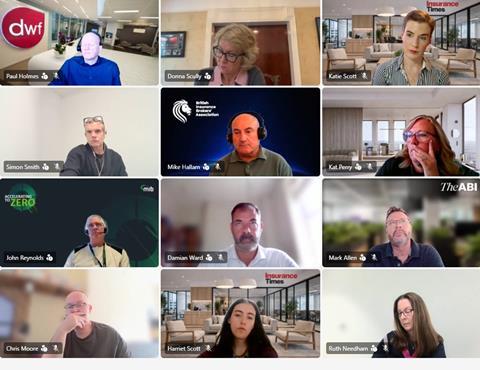
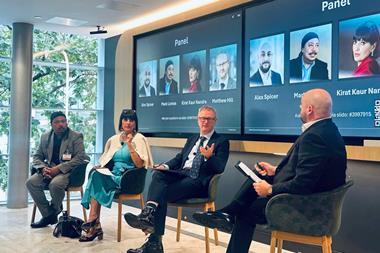
Speaking at the latest quarterly Fraud Charter roundtable on 15 September 2026, hosted by Insurance Times and sponsored by law firm Carpenters Group, counter fraud experts warned that they are seeing a surge in complaints written by AI because chatbots have made it easier for first party fraudsters – and genuine claimants – to “double down” when their claims are challenged.
James Burge, group head of fraud and recoveries at Hiscox, noted that there has been “more demand” around managing responses to challenge letters as AI has sped up the ability for consumers to respond.
For teams tasked with overseeing complaint procedures, Burge said that “the AI generated complaint letters are so frustrating because they throw the kitchen sink in, even if it’s got nothing to do with the complaint”. Voluminous letters of this nature inevitably strains insurers’ resources.
Paul Holmes, partner at DWF Law, added: “Unfortunately, what we’re seeing on quite a large scale now are these AI complaints, which are often long, rambling letters relying on what ChatGPT has told [customers] about vulnerability and legislation.
“Any insurer complaints team will say this is a major issue. It’s also an issue for the courts.
”We’ve had two claims just in the past few weeks where the courts have had to issue orders preventing people involved in fraudulent claims from issuing repeated claims because they’re issuing other types of claims as well – and they’re doing it via AI.”
AI versus AI?
This emerging risk raises a dilemma for insurance and law firms. Lengthy, AI supported complaints are hitting team to-do lists at pace and while current best practice sees humans reviewing complaints with a fine toothcomb, the volumes of such documents are beginning to outpace the workload employees can handle day-to-day.
Read: Insurance sector calls for ‘more pressure’ on technology firms to tackle online fraud
Read: Deepfakes and AI powered fraud techniques may put the brakes on sector digitalisation
Explore more Fraud Charter related content here, or discover other news analysis stories here
This begs the question of how far insurers and law firms can go in using AI themselves to work through AI generated or AI assisted complaints.
Damian Rourke, partner at law firm Clyde and Co, explained that he has experimented with building his own AI agent to “triage complaints” and “distil down the actual complaint into a couple of paragraphs with relative ease”.
However, the use of AI agents is not entirely foolproof for this type of work.
Matt Gilham, director at Whitelk Fraud Performance Consulting, warned that “there’s a real risk of AI generating a swamp of activity” that “only a human can intervene in”, with a “real risk of resources, be it complaints handling or fraud, ending up dealing with DSARs and complaints”.
The central challenge, he posed, is how firms “manage pressures to still have the resources to actually look at investigating fraud” around tackling the growing mountain of AI generated complaints – which Fraud Charter delegates agreed could span 70-odd pages thanks to citing legislation and AI phrased legalese.
With this problem set to “accelerate” as new language models develop monthly, Rourke explained that it is only a matter of time before the insurance industry gets to a point where the volume and length of these complaints mean humans cannot “physically deal” with them.
He continued: “The dereliction at that stage is having a queue of complaints which aren’t being dealt with because there is a mountain of AI slop that you just can’t physically work through.
“What happens to the people with legitimate complaints in those circumstances? Are you just going to leave them because you can’t physically do it?”
Only the beginning
Despite recognising the scale of the challenge breathing down the industry’s neck, experts attending the Fraud Charter gathering noted that human oversight is non-negotiable in ensuring that legitimate claims and vulnerabilities are not overlooked.
Further, the Solicitors Regulation Authority (SRA) released guidance entitled ‘Effective Supervision’, updated in June 2026, which stated that solicitors need to ensure “that outputs produced with the assistance of AI are subject to appropriate human review, scrutiny and professional judgement”.
The legal regulator also issued a warning notice in August 2026, stating that “both paid for and free to use AI tools may not provide the contractual and technical safeguards needed to maintain client confidentiality”.
From this perspective, Rourke explained that firms should be justified to ask courts to prevent third party claimants from using unsecured AI bots where complaints may expose personal data.
He continued: “One of the things I’m conscious of is that when people are dropping data from cases into a non-secure large language model, they’re essentially doing the same thing as leaving your bag on the train in terms of data breaches.
“That is where insurers or solicitors can push back and [tell claimants that] until [they] stop doing that, [they are] not going to interact on that basis. My personal view is that’s an entirely reasonable position to take.”
But, Damian Ward, partner at Keoghs, believes that this issue “goes beyond” just complaints, with AI being used in some cases to write judicial reviews – a type of court proceeding where a judge reviews the lawfulness of a decision or action made by a public body.
He explained that these reviews cannot be ignored and require “an enormous amount of human intervention, time and effort” in comparison to the “bot that’s created it on behalf of the entirely unmeritorious applicant”.
He continued: “There is a world that we could walk into, and we already see it to some degree, where we’ve got proceedings beyond the world of complaints where you’ve got to respond and where we start to see automated and generated proceedings on the back of the claims in bulk and we can’t ignore that – we’ve got to deal with that.
“But it goes a stage further and we’re just starting to see the beginnings of that.”

She joined the title after completing a Master's degree in Journalism in 2025, having previously graduated with a degree in English Literature.View full Profile




























No comments yet