


























‘When you’re in those really difficult times, the actual underwriting expertise, the risk management expertise, the discipline and getting the contract wording right is absolutely essential,’ says chief executive
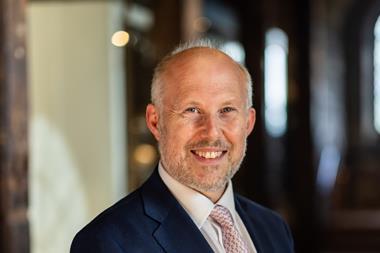
When Chris Jones became chief executive of the International Underwriting Association (IUA) in May 2025, he set out a three-pillar strategy centred on underwriting and claims expertise, talent and a more holistic approach to risk management.

Fifteen months later, much of that agenda remains unchanged. However, softer market conditions, geopolitical instability, emerging technologies and evolving distribution models have reinforced rather than diminished its importance.
Speaking to Insurance Times 15 months after his first interview as chief executive, Jones says his first year has been spent making the trade body more visible in the market, giving greater prominence to claims and building initiatives designed to help attract and retain talent in the London market.
He explains: “We’ve done an awful lot of really good stuff, but quite often it’s been a little insular in terms of ‘okay, we’ve done this project for members, let’s move on to the next project’.
“What we’ve tried to do is think about the tangible product and then make it visible to external stakeholders as well.”
That drive for visibility has seen the IUA place greater emphasis on thought leadership, external engagement and new communication channels, including podcasts and market-facing content designed to showcase the work being undertaken across its membership.
Claims take centre stage
One of Jones’ first structural changes was splitting the IUA’s underwriting and claims function into two distinct leadership roles.
Read: ‘Market does not need another moonshot’ – industry reacts as Lloyd’s ‘sunsets’ Blueprint Two
Read: Cargo and vessels worth £93bn trapped in Persian Gulf
Explore more market-related content here, or discover other interview stories here
The move was designed to ensure claims received greater prominence while maintaining the trade body’s connection to underwriting, risk management and regulation.
Reflecting on the decision, Jones says it was “absolutely the right thing to do”.
On the underwriting side, the IUA has launched a chief executive forum focused on emerging risks, strategic market challenges and future opportunities.
Claims, meanwhile, has gained a more defined voice through initiatives such as the organisation’s claims strategy group and a growing programme of educational activity.
But, crucially, Jones is keen to avoid treating either discipline in isolation.
“We don’t see ourselves as an underwriting association that only talks about underwriting,” he says.
“You get the value when you bring in risk management, claims, wordings and underwriting.”
The association has also expanded efforts to share expertise through podcasts and technical sessions that bring underwriting and claims leaders together to discuss issues affecting specific classes of business.
London’s opportunity
Although geopolitical tensions and economic uncertainty continue to create challenges for insurers, Jones believes an opportunity lies in the fact that they also highlight the value of London’s specialist expertise.
Pointing to recent instability in the Persian Gulf and ongoing conflict in Ukraine, he argues that London’s established products and technical capabilities have repeatedly demonstrated their worth.
“The products that we are really well known for in London, like a war policy or political risk policy, have actually worked in the ways that we expected them to,” he says.
“When you’re in those really difficult times, the actual underwriting expertise, the risk management expertise, the discipline and getting the contract wording right is absolutely essential.”
And under Jones’ leadership, the IUA has increasingly sought to share that expertise internationally through engagements with markets including Singapore, Indonesia and Greece, while using insights from overseas markets to inform discussions in London.
Talent challenges
Of the three pillars Jones outlined when he took office, he identifies talent as the area of the greatest long-term concern.
The IUA Futures programme, launched to support professionals in the first years of their careers, has attracted strong member engagement and now forms a key part of the association’s next generation strategy.
However, Jones acknowledges that wider demographic trends continue to present challenges for the market.
Referencing recent stats from the London Market Group, he points to concerns around an ageing workforce and a declining proportion of younger professionals entering the sector.
“The industry is getting older as an average and that’s a bit of a call to arms,” he says.
At the same time, recruitment levels have fallen across parts of the market, creating questions around whether reduced hiring reflects soft market conditions, artificial intelligence (AI), or a combination of both.
Jones believes AI will inevitably reshape entry-level roles, but rejects the idea that technology will replace the human expertise at the heart of the London market.
“It’s augmenting what the human market does,” he says. “We are still a people business. It’s not that we won’t need underwriting assistants, it’s just that you might need a slightly different skillset for that assistant.”
Looking ahead
Beyond talent, Jones expects emerging risks, market digitalisation and evolving distribution models to feature heavily in the IUA’s future work programme.
Facilities, smart follow propositions and MGA growth are all areas being closely monitored as the market continues to evolve.
While the IUA has no intention of directing members towards or away from particular business models, Jones accepts that many of these developments are becoming permanent features of the market landscape.
The challenge, he says, lies in ensuring London adapts to those changes while preserving the specialist expertise that has long underpinned its global position.
“A lot of these new developments are here to stay,” he adds.
“It’s about ensuring London remains highly competitive and retains its ability to provide that intellectual capital into the sophisticated, large-risk wholesale environment.”

With a particular interest in regulation, technology, innovation and political stories, he has covered issues from the multioccupancy buildings scandal to the insurance implications of quantum computing and the growth of new markets.View full Profile






























No comments yet