





















As MGA portals become central to broker trading, a chief executive warns that there is a ‘danger’ in brokers shoehorning risks through them that require underwriter collaboration
As the ever nimble MGA market leads the insurance charge to invest in digital infrastructure, the development of MGA digital trading platforms has seen rapid growth.

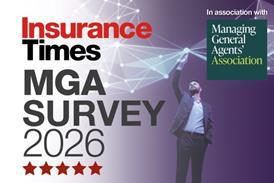
Indeed, Insurance Times’ Five Star Rating Report: MGA Market 2025/26 revealed that 47% of brokers regularly use online platforms to place risks directly with MGAs, while a further 30% said they do so occasionally.
While software houses offer broad and standardised access to multiple insurers, MGA portals are single-provider platforms designed to reflect specialist underwriting appetite, making them especially valuable for SMEs and niche markets.
Alongside an increase in demand is the growing push towards portal-only trading, where risks are placed exclusively via digital MGA platforms with little or no direct interaction with an underwriter.
However, despite the increasing popularity of portal trading, the MGA survey also raised broker concerns regarding how ideal portal-only trading could be when dealing with complex or non-standard risks.
Speaking to Insurance Times, Managing General Agents Association (MGAA) chief executive Mike Keating warned that “the danger is in if the MGA is digital and eTrading only and the broker’s trying to shoehorn what requires input” or underwriter intervention.
He added that, generally, complex risks are unlikely to progress far through rated digital platforms as key aspects of the customer’s risk profile typically fall outside standardised digital question sets within the first few stages of the journey.
“No one understands their customer needs better than the broker, so if the broker feels that using a MGA eTrading digital portal is meeting customer needs, that’s very encouraging,” he said.
“What it is clear is that MGAs are being very adept at where they’re dealing with their distribution as it can go through a eTrading portal, which is allowing MGAs to continue having their frontline underwriters to work with brokers on more complex and more difficult risks. It’s a natural collaboration.”
Alison Williams, managing director at Prestige Underwriting, echoed this view as she noted that, for many brokers, the ability to pick up the phone and work collaboratively with an underwriter remains critical.
For MGAs that rely on portal-only trading, this represents a point of contention.
She explained that there was a risk that, if taken too far, portal-only models could feel “restrictive and reduce the flexibility and judgement that brokers rely on to deliver the right outcomes for clients”.
“That said, digital trading is not inherently negative,” she continued.
“The challenge is recognising that not all risks or broker relationships are the same. Complex, bespoke or non-standard risks still benefit enormously from dialogue, experience and underwriting insight that cannot be fully replicated by a platform.”
Enhancing broker relationships
A Prestige Underwriting broker survey, published in June 2025, revealed that 42% of brokers turn to MGAs rather than traditional insurance companies as their first port of call for placing non-standard risks.
Read: In Focus – Should insurers give brokers more ownership of coverage points when eTrading?
Read: Whitepaper warns brokers to digitise faster as competition intensifies
Explore more eTrading related content here, or discover more news analysis here
With a view that technology should support broker relationships and “not replace them”, Williams believes that hybrid models are the most effective.
This way, she added, portals can handle the routine efficiently and “brokers can easily escalate, discuss and adapt when a case requires it”.
For Karen Weir, Weir Insurance Brokers owner, choosing an MGA partner supported by an underwriting team and integrated with its customer relationship management system to eliminate double keying was a priority.
While Weir appreciates that MGA portals are financially efficient for the MGA, the typically lower premiums mean that brokers also “need to consider efficiency”.
She said: “Many businesses don’t fit the tick boxes answers and I can foresee issues with claims where a tick box answer or business description could be challenged if not answered strictly correctly.
“This could also open the door for aggregators to steal some market share without offering the advice that particularly smaller businesses need.”
Seeing anything from an “architect to a zoo, sole trader to larger limited companies, in any given day”, Katie Freemantle, managing director at the Federation of Small Businesses (FSB) Insurance Service, said these tensions were commonplace when operating across one of the broadest SME client bases in the market.
Despite soft market conditions, Freemantle said that many composite insurers still struggle to accommodate complex small insurance enquiries through software house platforms.
Assisting its business placed in software house platforms, Freemantle explained that the FSB have turned to a carefully selected panel of MGAs, many specialising in particular schemes.
She said: “The majority of MGA’s that we work with have portals and their portals replicate the software house question set in many ways.
“Some trades, such as restaurants or bars, may ask for additional information than originally retrieved, which our team can then request from customers quite easily. Most portals also allow for additional information to be provided at point of referral, which can include any additional risk features that did not fit within the question set.”
She added that FSB’s teams find portals a fast and effective way of trading because of quicker turnaround times, when compared with presentation submissions.
However, Freemantle added that there can be occasions where a risk may be incredibly complex and involve multiple trades, locations, extensive work away and exports.
In this event, she said that a presentation is the safest option to make sure that all captured information is relayed accurately.
She continued: “In many cases, the MGA’s that we work with are happy to initially review the presentation and confirm whether it is a risk for them, whether we should proceed to put it on their portal or they may even enter it themselves.”
Promising future
Of course, the impact of artificial intelligence (AI) on MGA portals is expected to play an increasingly influential role.
Rather than replacing underwriters, Keating noted a trend where MGAs were starting to use AI to triage broker enquiries.
He explained that the AI is being used to filter and structure risk data, so that underwriters can price that risk more efficiently.
“There’s going to be clear growth where MGAs invest in AI to triage presentations,” he said.
“It increases your underwriter’s productivity because they don’t have to trawl through a presentation and extract the risk information they need to price the business.”
AI can also provide advantages to MGAs at the point of submission. For example, Freemantle pointed to the conversation surrounding documentation possibly being dropped into a platform and that platform then capturing the information within.
She said: “This would obviously be a fantastic innovation, along with human checking points to make sure it has been captured correctly. This would be a great time saver for all involved.”
With MGA portals making great strides in the market already, Barry Driscoll, chief trading officer at Brown and Brown Europe, told Insurance Times that “there is still more to do to streamline the experience” which can be implemented by a smarter use of AI.
By using AI to simplify journeys, reduce rekeying, reduce question sets and improve workflows to speed up underwriting, he explained that portals can provide quicker responses be “more intuitive” and “far more supportive tools for everyone involved”.
Despite this promise in MGA digital platforms, however, Driscoll added that there’s “still a place” for software houses when it “makes sense for certain products”.
He concluded: “The key is to give brokers the right route for the right product, whether that’s through a tailored MGA platform or an established software house so they can trade quickly, confidently and with minimal friction.”

She joined the title after completing a Master's degree in Journalism in 2025, having previously graduated with a degree in English Literature.View full Profile





























No comments yet