


















Verlingue’s head of private clients discusses rising costs, new wealth and shifting lifestyles that are redefining what a private client looks like
The private client insurance market is being reshaped by forces well beyond the industry itself.

Inflationary pressure, rising rebuild costs and shifting asset values have made protection more complex and, in many cases, more urgent. At the same time, the profile of high net worth (HNW) individuals has changed markedly.
Wealth is increasingly being generated rather than inherited and the lifestyles that come with it are far less uniform than the traditional image of country houses, fine art collections and long-established estates.
Taken together, those shifts are forcing brokers to rethink what it means to serve a private client.
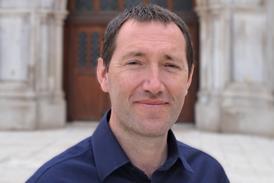
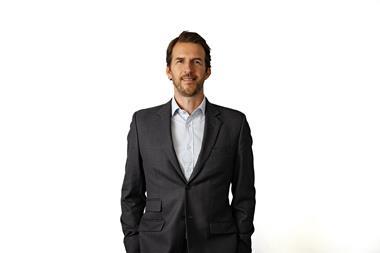
And for Jon Bethell, head of private clients at Verlingue, the change is not incremental – it is structural.
After more than two decades in insurance, spanning claims, underwriting and broking, he has seen the role move steadily away from transactional policy placement towards long-term advisory relationships built around understanding the HNW lifestyle.
“We don’t look to sell on price, we do look to sell on service,” he says.
That distinction, he argues, has become more important as clients themselves become more price-conscious while simultaneously expecting more sophisticated advice.
Today’s broker, in Bethell’s view, is no longer simply a middleman between client and insurer.
“The first thing with a broker always comes down to really, really understanding and knowing your clients,” he says.
“That comes down to being good at building relationships with them. Understanding what their lifestyle actually is, what’s important to them.”
Changing definitions of wealth
One of the most significant shifts Bethell has witnessed is the evolution of what a “private client” actually looks like.
Read: Verlingue backs apprenticeships to tackle insurance talent challenge
Explore more broker related content here, or discover more news here
Traditional assumptions about wealth – inherited estates, rural properties and static collections of high value assets – are increasingly outdated.
In their place is a younger, more fluid demographic whose wealth is often tied to entrepreneurship, technology or high-growth careers – and whose assets are more mobile and personal.
“If you think about HNW client these days, I always use the example of Steven Bartlett. He is a young, super successful guy who, I believe, lives in a penthouse flat somewhere in London,” Bethell explains.
“He’s into his jewellery too, so almost the complete opposite of who we would have had as a risk 20 or 30 years ago.”
That change, Bethell says, has direct implications for how brokers assess risk and structure cover.
Where fine art once dominated conversations in the HNW space, it is now more likely to be watches, jewellery and other portable valuables that carry both financial and emotional significance.
“People aren’t that interested in fine art these days, or not as interested, but people are more interested in jewellery,” says Bethell.
For brokers, the challenge is not simply tracking what clients own today, but understanding how those assets and lifestyles may evolve.
“It’s really important to be able to have this kind of conversation with clients about what their lifestyle is, what their plans are, what their future aspirations are.”
The problem of underinsurance
Alongside shifting wealth profiles, Bethell highlights a more persistent structural issue in the HNW market – underinsurance.
Rising construction costs, inflation in materials and increased labour expenses have all contributed to a growing gap between declared values and real-world replacement costs, particularly in residential property.
“Buildings are probably the biggest risk because of how much materials and labour have gone up in the last few years,” he says.
“And valuables are certainly behind it.”
In many cases, he argues, underinsurance is rarely the result of deliberate behaviour. Clients tend to engage with their insurance once a year at renewal, leaving valuations to drift out of date.
“Most of the time it’s completely innocent, you know, and it’s just because people don’t think about it.”
The consequences, however, can be significant, particularly when it comes to high value items that fluctuate in price, or trend-driven assets such as watches.
“Unless you keep on top of those values, you can quickly find that your watch that you thought was worth 10 grand is now worth double, triple because it’s become the new popular trend in the market and it’s spiked in value.”
For Bethell, this is where the broker’s role becomes most visible – not at the point of claim, but in maintaining ongoing conversations that prevent protections gaps from emerging.
“You might feel like you’re being a bit annoying, but actually, what you’re doing is your job.”
Theft, visibility and new risks
Changing lifestyles have also influenced the nature of risk itself, particularly around theft.
Bethell points to a shift in criminal behaviour, driven in part by the decline of cash holdings in commercial settings. As traditional retail environments have become less attractive targets, attention has increasingly moved towards private homes.
“Shops just do not hold as much cash in their premises or in their safes,” he explains.
“Thieves will still want to earn a living. So, they’ve actually turned their attention away from commercial residences and are focusing more on private residences.”
That shift, combined with the continued accumulation of highvalue personal possessions, has made affluent homes more exposed.
“Homes are becoming more of a target now because shops are becoming less of a target,” he explains
At the same time as noting underinsurance, Bethell highlights an increasingly modern risk factor – social media.
He says: “One of the worst things you can do is put that ‘having a pint’ photo from the airport on social media and then head off on holiday for two weeks, because you’ve just told the world that your house isn’t occupied and how long for.”
While many clients are aware of the risks, he notes that household behaviour is not always uniform.
“You, as the adult, as the parent, might realise the risks can be quite sensible and not post, ‘I’m at the airport, go on holiday’. But your 16-year-old kid is trying to show off to their friends,” he adds.
As summer travel increases, the fundamentals of risk prevention remain simple.
“It’s all the basic stuff you can do that anyone would do when leaving the house, right?” he explains.
”You go around, make sure the doors are locked, make sure the windows are shut, make sure everything’s locked.”
Beyond price
Despite broader economic pressures, Bethell believes that private client market risks losing sight of what differentiates it – service, advice and trust.
Price sensitivity, he says, has become more prominent in client conversations – but it should not dominate them.
“The thing that comes up an awful lot these days actually is price.”
However, he argues that brokers have a responsibility to reframe that discussion around value and outcome, rather than just cost alone.
While cheaper alternatives are almost always available, Bethell suggests the real question is how policies perform when they are needed most.
“What we have to really help to educate clients on is you can probably always, within reason, find a cheaper quote somewhere.”
Ultimately, he believes private client insurance is built on long-term relationships rather than individual transactions.
“We’re selling you a promise,” he says.
“We’re selling a piece of paper that promises that, in the event of a loss, your claim will be paid.”
Looking ahead, Bethell expects new risks, including AI-enabled fraud and increasingly sophisticated cyber threats, to continue reshaping the landscape. But despite that, he argues the core of the role will remain unchanged.
He finishes: “What we have to do is educate people and bring to life. What does that piece of paper and that promise actually mean, how does it actually work?”

With a background in local journalism, she has previously worked as a freelance reporter covering community stories and gaining valuable on the ground experience.View full Profile


























No comments yet