






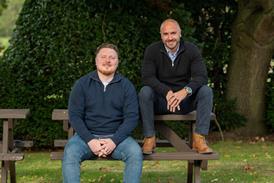


















‘The pace of change today is different because of multiple forces compounding simultaneously,’ says chief executive
The UK insurance industry stands at a crossroads as it enters 2026, with artificial intelligence poised to become the sector’s “operating system”, motor insurers bracing for losses and the long-running Blueprint Two project finally seeing some sunlight at the end of the tunnel.

Industry figures have painted a picture of a sector trying to keep up with transformation on multiple fronts – where the winners will be those who can find the balance.
AI moves from experiment to execution
Perhaps no theme dominates 2026 predictions more than the accelerating adoption of artificial intelligence (AI).
Ross Sinclair, founder and chief executive at EIP, said: “Throughout 2026, we expect to see insurers shifting from AI experimentation to scaled deployment. In particular, voice-led AI will become more commonplace throughout the industry, especially in non-regulated customer interactions.”
However, Sinclair cautioned that “AI is not a silver bullet for the insurance industry”.
He added: “While there are significant benefits to its use in underwriting, fraud detection and customer service, there are certain regulatory dangers in allowing machine learning to make regulated claims decisions. The firms that come out on top will be those who balance AI implementation with operational oversight, transparency, consistency and auditability.”
Franklin Manchester, principal global insurance advisor at SAS, went further, predicting that “a Fortune 500 insurer will begin phasing out policy admin systems in favour of insurance copilots in 2026”.
Alena Tsishchanka, global customer advisory director from the analytics firm also forecast that “many straightforward insurance claims will be settled in minutes by agentic AI”, while warning that “in order to safeguard customers’ trust, insurers will need strong AI governance”.
Amrit Santhirasenan, chief executive at Hyperexponential, said: “AI is moving beyond hype into practical adoption, embedded across workflows to enhance quality and depth of insight, speed and confidence. The fear of replacement is fading as actuaries and underwriters increasingly see AI as a collaborator, amplifying human expertise rather than substituting it.”
Motor market heads for the red
While technology offers opportunities, the UK motor insurance market faces a stark reality check. According to EY analysis, insurers are expected to record a net combined ratio of 111% in 2026 – meaning they will pay out £1.11 in claims and expenses for every £1 in premiums earned.
Read: What were insurance leaders’ 2025 highlights?
Read: Opinion – Will 2026 see swathe of IPOs as the consolidation of consolidators well runs dry?
Explore more risk management-related articles here, or discover other news stories here
Dan Beard, EY UK insurance partner, said: “UK motor insurers are once again facing the prospect of losses in an increasingly challenging market, with geopolitical, economic and regulatory changes and escalating consolidation all impacting portfolios.”
Premiums are forecast to rise by 3% in 2026, adding an average £15 per policy, but this will not be enough to offset escalating claims costs driven by expensive car technology and persistent inflation.
Beard noted that “the outlook has deteriorated further than expected over recent months due to the return of inflation and higher than expected premium rate reductions”.
Consolidation reshapes the broking landscape
The acquisition spree that has defined recent years shows no signs of slowing. Sinclair predicted that “the large-scale acquisition of small to medium-sized broking firms by highly acquisitive global insurance groups will continue to accelerate”.
He added: “This will change the shape of P&C broking and challenge the established dominance of global incumbent brokers. The result will be a fundamentally altered market dynamic, where agility, scale and integration capabilities become key differentiators.”
The insurtech sector faces its own reckoning, with Sinclair noting that “early signs of consolidation are emerging, accompanied by a clear market preference for firms that are already demonstrating profitability rather than those relying solely on hyper-growth narratives”.
Fusion energy – insurance’s next frontier
In one of the boldest predictions for the year ahead, Denis Bensoussan, head of space at Beazley, suggested that “2026 could be the year we learn of the successes of the first tests of commercial nuclear fusion plants”.
Bensoussan said fusion “promises abundant, safe and sustainable power and long-term energy security” in an “energy-hungry world” driven by data centre demand.
He added: “This is where insurance steps in, acting as a catalyst for innovation and the energy transition, enabling projects to scale and giving businesses the confidence to invest in the future.”
At its Risk and Resilience Predictions 2026 briefing, insurer Beazley warned that surging energy demand from artificial intelligence, mounting social tensions over job displacement and increasing geopolitical volatility are converging to create a more combustible risk environment for businesses in 2026.
Chief executive Adrian Cox predicted that next year will likely see physical protests against data centres due to their unwanted energy use and perceived role in job losses, urging both governments and businesses to prepare for more frequent and disruptive demonstrations. Beazley also highlighted escalating cyber risks, with incidents growing in scale and cost and questioned whether 2026 could mark the first time a major business suffers long-term or fatal damage from a cyber attack.
Blueprint Two and market modernisation
The Lloyd’s Market Association declared 2026 a “year of significant transition” for market operations.
An LMA statement said: “In 2026 we hope to see wider modular testing and continued resolution of the challenges in the development of the Blueprint Two project.”
Joe Brace, operations director at the LMA added: “The LMA supports Velonetic and Lloyd’s as they look to close out this long-running project. Our plan is to work closely with Velonetic to make sure any data transition is robust and secure, customer impact is thoughtfully handled, investments are aligned to long-term value, adoption timelines are realistic and impacts are thought through for all participants.”
The LMA and Brace also highlighted the rollout of testing as priorities, noting that “2026 will mark the first full test cycles”.
Reinsurers must get creative
The reinsurance market faces its own challenges. Christopher Gray, divisional director of reinsurance at Westfield Specialty International, said: “At present there are too many reinsurers chasing too few buyers and this is keeping rates down and the market soft overall.”
Gray identified “creative” as his “2026 reinsurance buzz word”, arguing that reinsurers “will need to offer multiclass expertise and cross-class relationships with the ability to develop new products”.
He concluded: “To succeed in this complex and challenging environment, reinsurance needs to prove its value. Clients will retain more risk if they don’t see a value in what they are buying.”
Emerging risks on the horizon
Looking beyond immediate challenges, Clyde and Co identified social media addiction, space activity, next-generation nuclear, sanctions, head office liability and litigation funding as emerging risks for insurers to monitor.
Neil Beresford, partner and lead of Clyde and Co’s emerging risks programme, said: “The risks faced by insurers in 2026 and beyond are evolving rapidly and present both challenge and opportunity.”
As Santhirasenan summarised: “The insurance industry has always been shaped by cycles, but the pace of change today is different because of multiple forces compounding simultaneously.”































No comments yet