























‘The future of underwriting will not belong to those who try to eliminate complexity, but to those who can interpret it – continuously, coherently and at scale,’ says report author
Traditional underwriting models are becoming increasingly misaligned with how modern risk behaves, with continuous volatility in geopolitical, technological, social and climate dynamics driving a need to move away from “static, point-in-time” decisions to a “continuous, signal-driven” approach.

This is according to the findings of a new report, released yesterday (16 February 2026) by research and advisory firm Celent – a GlobalData company – titled Liquid Underwriting, Transforming Underwriting into a Living System.
The report argued that given the interconnectivity of risks in the modern world, underwriters must utilise a system capable of “interpreting risk continuously, responding to events in real time and operating coherently within systemic uncertainty” – a system it christened “liquid underwriting”.
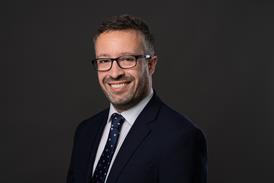
Report author Fábio Sarrico explained: “Risk no longer behaves like isolated events, it behaves like a system. If underwriting continues to assume stability in a world defined by fluidity, insurers will see volatility not only in loss ratios, but in strategic control, capital efficiency and trust. Liquid underwriting is the operational response to that reality.”
In essence, liquid underwriting seeks to replace fixed decisions – for example at policy submission or renewal – with ongoing analysis across the lifecycle of a policy.
The future of underwriting
The report recommended that those looking to implement such practices take a three layered approach – real time data collection, contextual and artificial intelligence-supported decision-making and intelligence-led portfolio management.
Read: Motor insurers paid out £11.9bn in 2025
Read: Property payouts to cross £6bn for second year running
Explore more risk management-related content here, or discover other news stories here
Sarrico pointed towards climate and political risks as examples of events which could change a portfolio profile in hours rather than months and for which quarterly or yearly risk analysis was insufficient.
He concluded: “Insurers are not facing a data shortage, they are facing a decision-coherence problem. Signals are everywhere, but underwriting systems were never designed to interpret them continuously or at portfolio level.
“Liquid underwriting is not an end state, it is an operating posture. The future of underwriting will not belong to those who try to eliminate complexity, but to those who can interpret it – continuously, coherently and at scale.”

He graduated in 2017 from the University of Manchester with a degree in Geology. He spent the first part of his career working in consulting and tech, spending time at Citibank as a data analyst, before working as an analytics engineer with clients in the retail, technology, manufacturing and financial services sectors.View full Profile


























No comments yet