























Data is revealing that the type of injuries sustained in road traffic accidents – or perhaps the ways people are reporting them – are changing, so what can the industry do to help the claims process stay fair and efficient?
England and Wales’ current two-portal system for motor-related personal injury claims has introduced an unnecessary layer of complexity to the claims process, leading to duplicated work and, in some situations, abuse of the claims system.

Moreover, following the 2021 whiplash reform programme and the introduction of fixed compensation tariffs, the types of injuries drivers have been reporting have changed significantly, causing headaches for insurers who see a level of ambiguity in the reasons why.
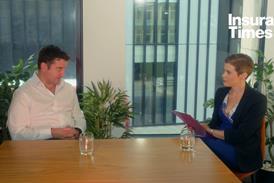
To discuss the trends, and what the industry can do to respond to them, Insurance Times sat down with data and analytics provider Verisk’s head of motor, Matthew Thorby.
Currently, two portals exist to facilitate road traffic accident personal injury claims – the longstanding Ministry of Justice (MoJ) portal, and the newer official injury claim (OIC) portal, introduced in 2021 to allow consumers to personally handle low-value accidents with a personal injury element up to £5,000.
Prior to the introduction of these portals, Thorby explains, the personal injury landscape was a “wild west”, where “each claim was evaluated based on its individual merits”, and claims handlers had a far harder job assessing medical records to determine a settlement range.
While Thorby is keen to point out that the portals and injury tariffs have drastically improved many legacy processes for claims handling, their introduction may have led to new pain points.
Indeed, Verisk research suggests that some 20% of claims seen in the MoJ portal are duplicated in the OIC portal and the number of non-tariff or mixed injuries – claims involving a combination of tariff and non-tariff injuries – is on the rise, reaching around 54% of claims in 2025. Such claims tend to be considerably higher value.
Data from the ABI supports this, with one report comparing mixed injuries from 2023 with a calculated equivalent from pre-tariff 2016, finding that they had risen from 27% to 39% of all claims.
Mode of crashes
One explanation for the change to claims compositions and values is that the common modes of road traffic accidents are changing.
Read: FOS complaint levels climbing despite Consumer Duty reforms
Read: Schemes brokers enjoy commission growth after strong year for large schemes
Explore more Data Matters content here, or discover other news analysis stories here
Crashes caused by hits to the rear of a vehicle have dropped markedly, down from 51% of incidents in 2021 to 39% in 2025. Meanwhile, accidents caused by lane changes are up, swelling from just 5% in 2021 to 13% in 2025. The other most common mode of crash, vehicles pulling out of side roads, has remained largely flat.
Thorby explains: “What we’re seeing in this data is a gradual shift in how collisions are being described at the point of claim. Rear-end shunts used to dominate, but their share has steadily fallen.
“Autonomous emergency braking and forward-collision warning systems are now common in newer vehicles and are specifically designed to reduce low-speed rear-end impacts – 20mph speed limits will also be a factor in reducing rear-end collisions. These changes won’t eliminate rear shunts altogether, but it can reduce their frequency and severity.
“Lane-change collisions have become more common. Part of this is likely down to UK driving conditions with heavier congestion, more lane-managed roads and more complex junction layouts, all of which increase the likelihood of side-impact and merging incidents.”
Another, more cynical, explanation would be that claimants and personal injury lawyers are becoming cannier about not submitting solely tariffed claims, thereby diminishing the likelihood of being awarded a smaller, fixed amount.
Thorby says: “We’re beginning to see this shift from whiplash to ‘actually my elbow was bumped too’ or ‘my knee was bumped’ or ‘I’ve got a bruise to my ankle’ and those things were never presented before.”
According to Thorby, the compensation culture in the UK is partly to blame. People want both low premiums and maximum value when they make a claim. Realistically, they can’t have both.
Drivers may also feel entitled to higher payouts, given that motor accidents have decreased considerably over the past 10 years, while premiums have not, due in part to potential savings being swallowed by rising repair costs.
As Mike Anderson, owner of industry consultancy Collision Advice, explained in a 2025 report, new vehicle technology has “redefined repairability” with “costly calibrations and diagnostic repairs” adding between £250 and £600 to the repair of newer vehicles.
A unified approach
With submissions often duplicated between two portals, and complex claims on the rise, Thorby suggests a streamlining of the two services into one.
“I think from structural process, one portal makes complete sense – it’s better for claimants, and, if you talk to any claimant law firms, they will tell you how unpleasant the OIC portal is for them to navigate,” he says.
“Then having to do that through the MoJ portal as well, which is less than perfect, is not great for the claimant side. It adds complexity and costs into their business, which means they need to look for opportunities to earn and cover these costs. In the current climate that can only come through a slice of the damages.
“It’s less than ideal infrastructure. A single portal would be smoother, wouldn’t repeat the steps of the claimant that don’t need repeating and would drive better patient outcomes.”
He also believes the Judicial College guidelines for personal injuries – a set of advisements on the appropriate awards for various cases of pain, suffering and injury – should continue to be reviewed often and in collaboration with industry partners.
This, he says, will help the industry to identify and address situations among claimants that have the potential to be abused or “get out of control”.
Whatever tweaks and changes the industry decides to make, Thorby believes that it’s important to remember how far the sector has come, and how vital the job it already does is.
He concludes: “When someone is genuinely hurt post-road traffic accident, our industry does a fantastic job of putting the claimant in the right position, putting them in the middle of the process, and making sure they get the right treatment, care and compensation.”

He graduated in 2017 from the University of Manchester with a degree in Geology. He spent the first part of his career working in consulting and tech, spending time at Citibank as a data analyst, before working as an analytics engineer with clients in the retail, technology, manufacturing and financial services sectors.View full Profile
































No comments yet