




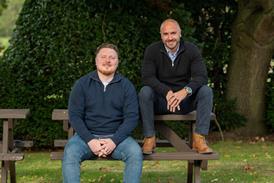




















’Your firm could be doing loads of good in the world but it’s that little bit of bad that sours the whole soup which means that retaining that talent is very difficult,’ says campaign manager
It is the industry’s job to make insurance appeal to all the varieties of demands that new talent are prioritising, according to Shape Underwriting managing director Mandy Hunt.
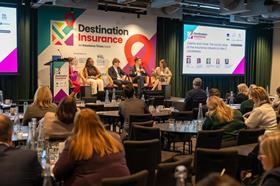
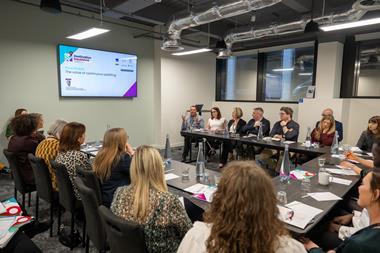
Speaking during a panel session at the Insurance Times Destination Insurance event last week (15 January 2026), entitled ‘How to position insurance as a career with purpose, impact and security’, Hunt explained that insurance needs to better broadcast the good it does to compete with other sectors for talent.
Chaired by editor Katie Scott, the panel discussed how job drivers are shifting for younger generations and how the industry must respond to position insurance as a purpose-led career choice.
In 2022, an Aviva poll revealed a 14% attraction rate to the industry, which dropped to 4% in a recent Chartered Insurance Institute survey from last year.
As a campaign manager at a student-led charity SOS UK that works to transform education and workplaces, Pierrick Roger explained that his firm’s research has shown that young people’s expectation of the workplace was “changing dramatically”.
He noted that this change is heavily impacting the sector due to the “strong disconnect” from young talent believing they could feel purpose and inclusion in insurance.
Escaping these preconceptions of insurance as “boring” is no easy task, but Hunt stressed that updating language of the industry could help change the narrative.
She explained that highlighting the sector’s innovation and the wide range of skills and roles – showing that “you can do almost anything” – could promote both value and inclusivity.
“We’ve got to be able to tell much better stories,” she continued.
“There is obviously a risk because you can’t tell customer stories, as some of them are so personal, but the negative parts get into the press and that’s why we’ve got to try and tell better stories, because our purpose is exemplary.”
Ethical considerations
A March 2025 survey by SOS UK identified that, among those still open to working in insurance, 64% said they would avoid companies that remain uncommitted to reducing fossil fuel underwriting.

Meanwhile, 68% expressed opposition to the industry’s support for environmentally harmful practices.
A big lever when it comes to attracting new engagement with the sector, Roger continued, is that there is a “cognitive dissonance” when young people enter the industry and realise that their employers’ ESG values do not align with their own.
He said: “Your firm could be doing loads of good in the world but it’s that little bit of bad that sours the whole soup, which means that retaining that talent is very difficult.”
While not every business will completely live up to the values young people want regarding ESG, Ruth Poulten, people experience lead at Intact Insurance, stressed that it is on “each of us to provide that challenge and by holding that mirror up” to the sector.
Agreeing with her fellow panellist, Hunt added that this perception of how unethical insurance is means the sector needs to be “much more proactive” about what “we care about and the stand we take”.
“For me it’s about making our industry what we all experience it to be, fulfilling, useful and purposeful,” she continued.
“When we talk about purpose, I can think about customers and claims from my time where I know we made a massive difference. I want people to hear these stories occasionally and for us to not be frightened to ask for them, because then people will see the purpose of what we do and ESG is all part of that.”
Changing the narrative early
A key problem to this storytelling approach, Roger noted, is that “young people are hyper informed” because of social media, which mean that bad stories about the industry “spread a lot faster than those good stories”.
Read: Destination Insurance – Insurance should treat its talent problem like ‘eating an elephant’
Read: Destination Insurance – Leader warns industry is not hiring enough young talent
Explore more talent related content here, or discover more news here
For Poulten, this suggests that the sector has created its own “echo chamber”, in which good stories about insurance are only ever shared with the same networks and are unlikely to reach new demographics.
To break this cycle, she believes that there needs to be more of a push to talk to young people about insurance at school age.
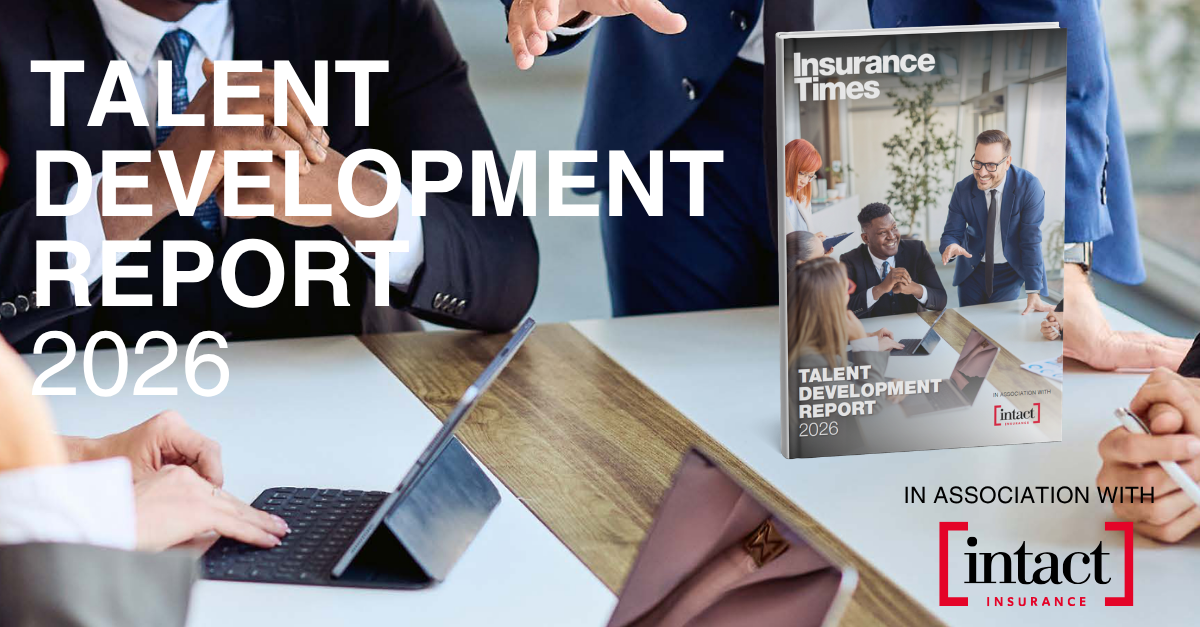
Indeed, Insurance Times’ Talent Development Report 2026 revealed that, when surveyed on the top three channels firms used to attract young talent, only 16% said university careers fairs were utilised, while just 11% selected partnerships with academic institutions.
In comparison, the top channel for respondents was job boards, such as LinkedIn and Indeed, at 53%.
Poulten told delegates that Intact have found that young children are already making their minds about careers at the age of 18, which proves that as an industry “we’ve got to get in sooner”.
She continued: “That’s something that Intact Insurance is doing through its Inspire programme across some of the regions in the UK – going into schools and raising the profile of what it means to work for an insurer.
“So, there’s the outreach piece, there’s the in-person, but it’s so important that we bring those young people through the doors as well and show them what it looks like to be in the world of work in the office.”
For example, Hunt added that when she used to work at Intact Insurance, formerly known as RSA, with Poulter, the firm invited a local college into the office and ran an apprentice assessment centre with the eldest year group.
She concluded: “It takes effort and giving up some time and people to do it but if we’re really serious about making insurance a destination of choice then we have to.”

She joined the title after completing a Master's degree in Journalism in 2025, having previously graduated with a degree in English Literature.View full Profile


























No comments yet