




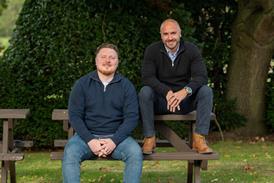




















‘If you spend so much of your life doing a job, it kind of has to mean something,’ says chief impact officer
Defined by Covid-interrupted formative years in the first digital-native age, the members of Gen Z – generally classified as those born between 1997 and 2012 – are now maturing into the workforce in ever-growing numbers. So, with a worldview shaped by events and technology a far cry from previous generations’, what can the industry do to better accommodate these future leaders?

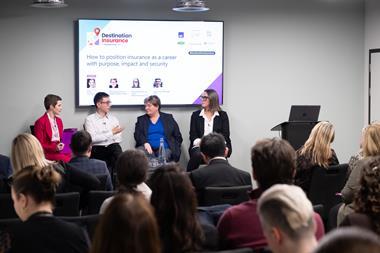
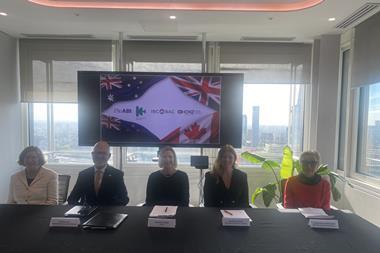
This was the question up for discussion at a panel entitled The social value of the insurance industry to Gen Z candidates, at Insurance Times’ inaugural Destination Insurance talent conference, held last week (15 January 2025).
Participating in the panel were Bamishe Alao, young broker ambassador at Aon, Jacob Diggle, chief impact officer at charity UK Youth, Laura Griffiths, head of learning and development at Gallagher and William Macdonald, account handler at Clegg Gifford.
One theme the panel brought up repeatedly was the desire for young staff to be in work that they felt had meaning and social value and, equally importantly, that they felt respected while doing it.
Diggle explained: “If you spend so much of your life doing a job, it kind of has to mean something. And that doesn’t have to mean big, grand, lofty ambitions – what that might mean is a stable career and the ability to support your family.
“But some of it will also be a broader ambition about serving your community and supporting a wider kind of purpose. That’s something that a large portion of the generation are looking for.
“And that ties into respect. It comes with being paid a decent wage and not feeling like you’re being given meaningless menial work, or set ridiculous challenges because that’s what [previous generations] had to go through.”
Getting this wrong, however, has far higher stakes than simply turning a candidate against a given company, it has the potential to disrupt the whole industry’s talent pipeline for decades to come.
He continued: “We’ve had some tough years. A lot of young people have bounced in and out of the labour market. If you give a young person a really bad first experience of work, you are not just wasting your time – and the money you’ve spent recruiting and training them – but you’re scarring their potential in their career for a really long time.”
This desire for fulfilling work can even supersede the hunt for high pay. Many studies have identified Gen Z as a value-driven generation, with a “purpose over pay” mentality. Indeed, a 2025 survey by talent platform Unstop found that 72% of Gen Z workers prioritised job satisfaction over pay.
That isn’t to say Gen Z are happy to be paid less and, according to Griffiths, what Gen Z staff at Gallagher really value is transparency and predictability of their pay.
She said: “They want that real transparency around what is their pay going to look like as they develop through the programme. At clear points in time, what are those progression points from a compensation perspective?”
Flexibility and community
Beyond the fundamentals of fulfilling work, respect and pay, many panellists felt that the industry has two key offerings with which it could develop an attractive proposition – flexibility and community.
Read: Destination Insurance – Leader warns industry is not hiring enough young talent
Read: Insurance Museum calls on industry for more support in promoting sector careers
Explore more talent related content here, or discover other news stories here
Flexibility – including remote or hybrid working and compressed or flexible hours – is often a non-negotiable for the generation who spent much of their time at college and university taking lectures over video conferencing applications.
Griffiths explained the approach her firm has taken: “We haven’t pushed for a complete return to office policy within Gallagher – we have a hybrid working model.
“We’re keen with our early talent that they do spend time in the office because we do see the value of them building those relationships and the community sense that it builds and also being able to learn from their colleagues on a day-to-day basis.
“On the flip side of that, there is the option for people to work from home a couple of days a week as well. It gives them that space and time they need to have a life outside of work.”
Insurance can likewise make use of its tight-knit community to appeal to Gen Z’s social, diversity and inclusion awareness. A minor tweak may be needed to social events however, as many in the industry have noticed – often to their disappointment – that the generation seems to have an overall aversion to alcohol.
Alao explained her own experience in that regard: “That community side [is really important] – I’ve met a lot of people at events.
“It wasn’t all about having alcohol there. A lot of the time they have apple juice, they have orange juice, they have other options for you. But having those Gen Z spaces where you can meet other graduates, other young people – that’s where I found my close, close friends in insurance.
“Having that community, I never would have said I wanted to spend my whole career in insurance if I hadn’t had that from the start. Not every industry has that and I think that makes insurance so special.”

He graduated in 2017 from the University of Manchester with a degree in Geology. He spent the first part of his career working in consulting and tech, spending time at Citibank as a data analyst, before working as an analytics engineer with clients in the retail, technology, manufacturing and financial services sectors.View full Profile




























No comments yet